Muffler Sound Selector
Find Your Perfect Muffler Sound
Select your vehicle type and engine to get personalized recommendations based on UK noise regulations and real-world sound profiles.
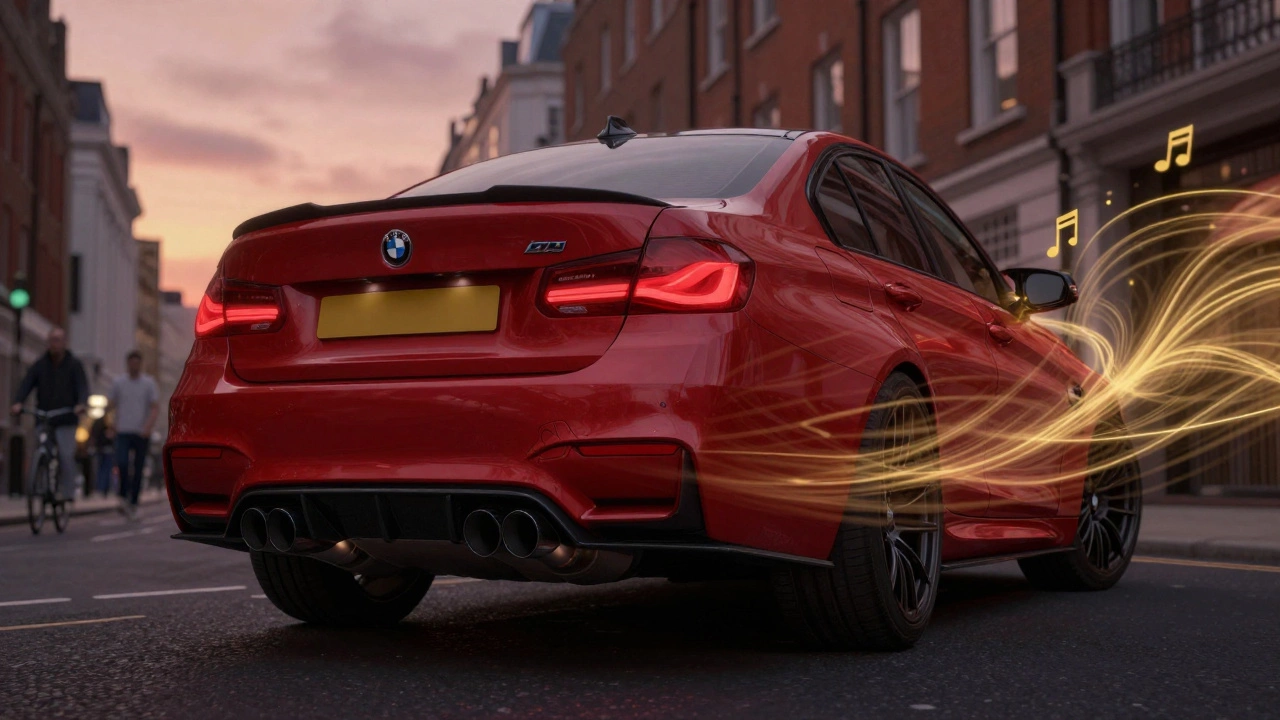
There’s a reason you hear a deep rumble from a classic American muscle car and a sharp crack from a European sports car. The muffler isn’t just there to quiet things down-it’s part of the personality. If you’re asking which mufflers sound the best, you’re not just shopping for parts. You’re chasing a feeling. The right sound turns a daily driver into something that makes people turn their heads. But not all loud is good. Not all quiet is smooth. And not every "best sounding" muffler works for your car, your neighborhood, or your sanity.
What Makes a Muffler Sound "Good"?
There’s no universal standard for the "best" sound. What sounds epic to one person feels like a nuisance to another. The best muffler for you depends on three things: your car’s engine, how you drive, and where you live.
A deep, low rumble at idle? That’s the sound of a straight-through design with minimal packing material. It lets exhaust gases flow freely, reducing backpressure and boosting low-end torque. That’s why it’s popular on V8s and big-displacement engines. But on a four-cylinder turbo? That same setup can sound thin, raspy, or even buzzy-like a lawnmower with a megaphone.
Then there’s the crackle and pop on deceleration. That’s not a defect-it’s intentional. Some mufflers use baffles and chambers to reflect sound waves in a way that creates those signature backfire pops. They’re fun on track days, but they can be annoying in traffic or at 7 a.m. on a Sunday. And in the UK, where noise regulations are strict, you could get fined if your exhaust is too loud.
The best sound isn’t just about volume. It’s about tone, character, and consistency. A good muffler doesn’t change pitch when you rev-it holds its note. It doesn’t drone at highway speeds. It doesn’t sound like a tin can rattling over potholes.
Top Muffler Types and Their Sounds
Not all mufflers are built the same. Here’s what’s out there, and what they actually sound like in real-world use.
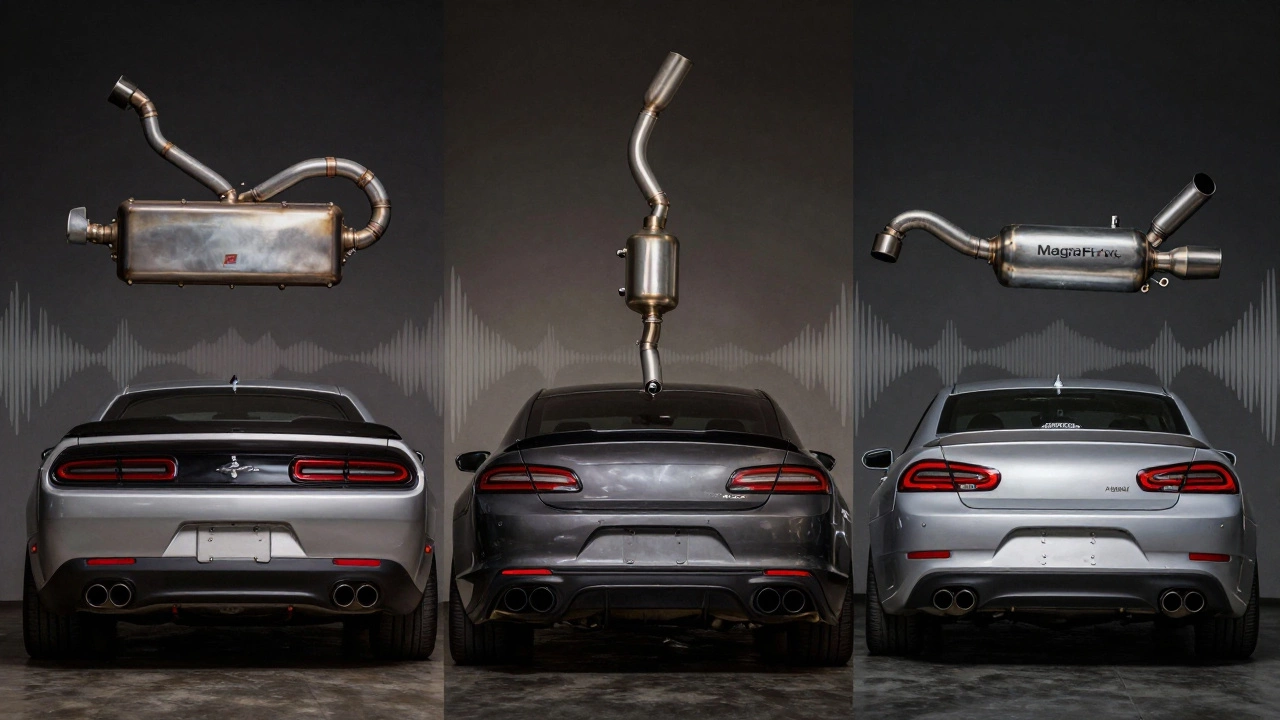
- Chambered mufflers - Think Borla, MagnaFlow, or Flowmaster. These use internal chambers to cancel out certain frequencies. The result? A rich, deep, resonant tone that’s loud without being obnoxious. Popular on muscle cars and trucks. The Flowmaster 40 Series is known for that classic American V8 growl-loud enough to announce your arrival, quiet enough to not wake the neighbors.
- Straight-through (glasspack-style) - These are simple: a perforated pipe wrapped in fiberglass or steel wool. They’re cheap and loud. The sound is raspy, high-pitched, and can get tiring on long drives. Not ideal for daily drivers unless you like constant engine noise.
- Reverse-flow mufflers - Used mostly in performance and racing applications. They redirect exhaust flow to reduce drone and improve sound quality. Brands like Akrapovič and钛合金 (titanium) systems use these for a refined, aggressive tone that stays controlled under load. Common on BMWs, Audis, and Porsches.
- Quiet touring mufflers - Designed for luxury cars or commuters. Brands like Remus and Milltek offer models that reduce noise without killing performance. They sound like a well-tuned engine-not a race car. Perfect if you want to feel the power without the attention.
Here’s a quick breakdown of how these types compare:
| Type | Sound Profile | Best For | Drone at 70 mph? | Legal in UK? |
|---|---|---|---|---|
| Chambered | Deep, resonant, full-bodied | V8 trucks, muscle cars | No | Yes, if under 95 dB |
| Straight-through | Raspy, high-pitched, buzzy | Track use, budget builds | Yes | Often no |
| Reverse-flow | Refined, aggressive, controlled | Performance sedans, sports cars | Minimal | Yes |
| Quiet touring | Subtle, sporty, mature | Luxury cars, daily drivers | No | Yes |
What Do Real Owners Say?
Looking at forums, YouTube reviews, and owner groups across the UK, three names come up again and again for the best sound:
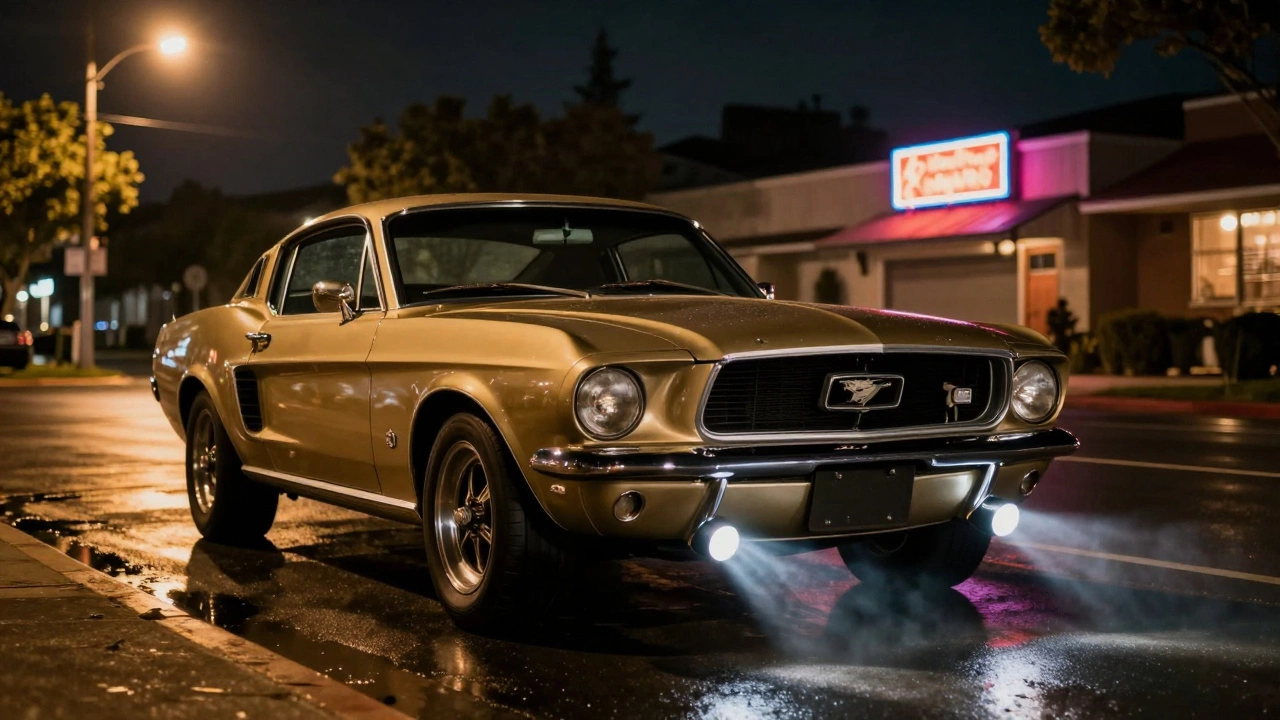
- Flowmaster 40 Series - On a Ford Mustang GT or Chevrolet Camaro, it delivers that iconic American V8 sound without the highway drone. Owners say it’s "loud enough to feel alive, quiet enough to sleep at night."
- Akrapovič Evolution - On a BMW M3 or Audi S4, it’s the gold standard. The titanium construction reduces weight, and the sound is crisp, deep, and musical. It doesn’t shout-it commands attention. Many owners report a 5-7% power gain from reduced backpressure.
- MagnaFlow Stainless Steel - A solid all-rounder. Works well on everything from Honda Civics to Dodge Rams. The tone is smooth, not harsh. It’s one of the few that sounds good on both naturally aspirated and turbocharged engines.
One owner in Manchester, who swapped his stock exhaust for a MagnaFlow on his 2018 Subaru WRX, said: "I thought I wanted loud. I got deep. Now I don’t even notice it’s changed-until someone else points it out. That’s the sign of a good muffler. It doesn’t scream. It just feels right."
What to Avoid
There are a lot of cheap, no-name mufflers on eBay and Amazon that promise "race car sound" for under £100. Most are made from thin steel, rust in a year, and sound like a broken vacuum cleaner. They don’t improve performance-they just make your car annoying.
Also avoid "straight-pipe" setups without any muffler at all. They’re illegal in the UK under the Road Vehicles (Construction and Use) Regulations 1986. Police can issue fines up to £1,000 for excessively noisy exhausts. Even if you’re not caught, you’ll annoy pedestrians, cyclists, and your own family.
And don’t assume bigger = better. A muffler that’s too large for your engine can hurt low-end torque. A 3-inch exhaust on a 2.0L turbo might sound cool, but it’ll make your car sluggish in town. Match the size to your engine’s output.
How to Choose the Right One
Here’s a simple process to find your ideal sound:
- Know your engine. A 4-cylinder needs a different muffler than a 6-cylinder or V8. Turbo engines respond better to reverse-flow designs. Naturally aspirated engines love chambered mufflers.
- Listen before you buy. Watch YouTube videos of your exact car model with the muffler installed. Filter for "real driving" clips-not just static revs. Look for videos from UK owners.
- Check local noise limits. In the UK, exhaust noise must not exceed 95 dB at 0.5m from the vehicle. Most police use handheld decibel meters. If it sounds like a jet taking off, it’s too loud.
- Think long-term. Stainless steel lasts longer than aluminized steel. Look for lifetime warranties. You’re not just buying sound-you’re buying durability.
- Consider installation. Some mufflers are direct replacements. Others need custom fabrication. Factor in labor costs. A £300 muffler with £200 installation might not be worth it if a £450 bolt-on kit does the same job.
Final Thought: Sound Is Personal
There’s no single "best" muffler. The one that sounds perfect to you might sound terrible to someone else. But the best muffler is the one that makes you smile every time you start the engine. It’s the one that doesn’t make you cringe on the motorway. It’s the one that fits your car, your life, and your rules.
If you want deep, rich, and legal-go chambered. If you want refined and high-end-go reverse-flow. If you want balance and reliability-go stainless steel with a proven brand. Skip the bargain bins. Don’t chase volume. Chase tone. Because the best sound isn’t the loudest. It’s the one that feels like it was made for your car.
What muffler gives the deepest sound?
Chambered mufflers, like the Flowmaster 40 Series or Borla Pro XS, deliver the deepest, richest tone. They’re designed with internal chambers that cancel out high-pitched frequencies, leaving behind a low, resonant rumble. These work best on V8 engines and larger displacement vehicles. On a 4-cylinder, they’ll sound thin or tinny.
Are loud mufflers legal in the UK?
No, excessively loud mufflers are illegal under UK law. The maximum allowed noise level is 95 decibels at 0.5 meters from the exhaust. Police can issue fines up to £1,000 for non-compliant exhausts. Many aftermarket systems, especially straight pipes or cheap glasspacks, exceed this limit. Always check for a UKCA mark and ensure the system meets ECE R41 standards.
Do performance mufflers increase power?
Yes, but only slightly. A good performance muffler reduces backpressure, which can improve exhaust flow. On a tuned engine, you might gain 5-10 horsepower. On a stock car, the gain is usually 2-5 hp. The bigger benefit is throttle response and a more aggressive sound-not raw power. Don’t expect a turbocharged engine to turn into a race car just by changing the muffler.
What’s the quietest performance muffler?
The quietest performance mufflers are designed for luxury and daily driving. Brands like Remus, Milltek Sport (Quiet Series), and Akrapovič (Touring) use advanced internal baffling to reduce drone and noise while maintaining flow. These systems sound sporty at high RPM but stay civil at cruising speeds-ideal for long motorway trips or urban driving.
How long do aftermarket mufflers last?
Stainless steel mufflers last 10-15 years with proper care. Aluminized steel lasts 3-7 years and rusts faster in wet climates like the UK. Look for lifetime warranties on stainless models from brands like MagnaFlow, Borla, and Flowmaster. Avoid cheap imports-they often use thin metal and poor welds that fail within a year.