Spark Plug Diagnostic Tool
Diagnose Starting Issues
Enter your vehicle details and symptoms to see if new spark plugs will improve starting performance.
Analysis Result
Please complete the form to see your diagnosis
If your car struggles to start in the morning, especially when it’s cold, you’ve probably wondered: will new spark plugs improve starting? The short answer? Sometimes-but not always. Spark plugs are one of the most misunderstood parts in car maintenance. People swap them out hoping for a miracle, but if the real problem is a weak battery or a clogged fuel filter, new plugs won’t fix it.
How Spark Plugs Actually Work
Spark plugs create the tiny electric arc that ignites the air-fuel mixture in your engine’s cylinders. That’s it. No more, no less. They don’t boost power, improve fuel economy, or make your car louder. Their only job is to fire at the exact right moment so combustion happens cleanly and efficiently.
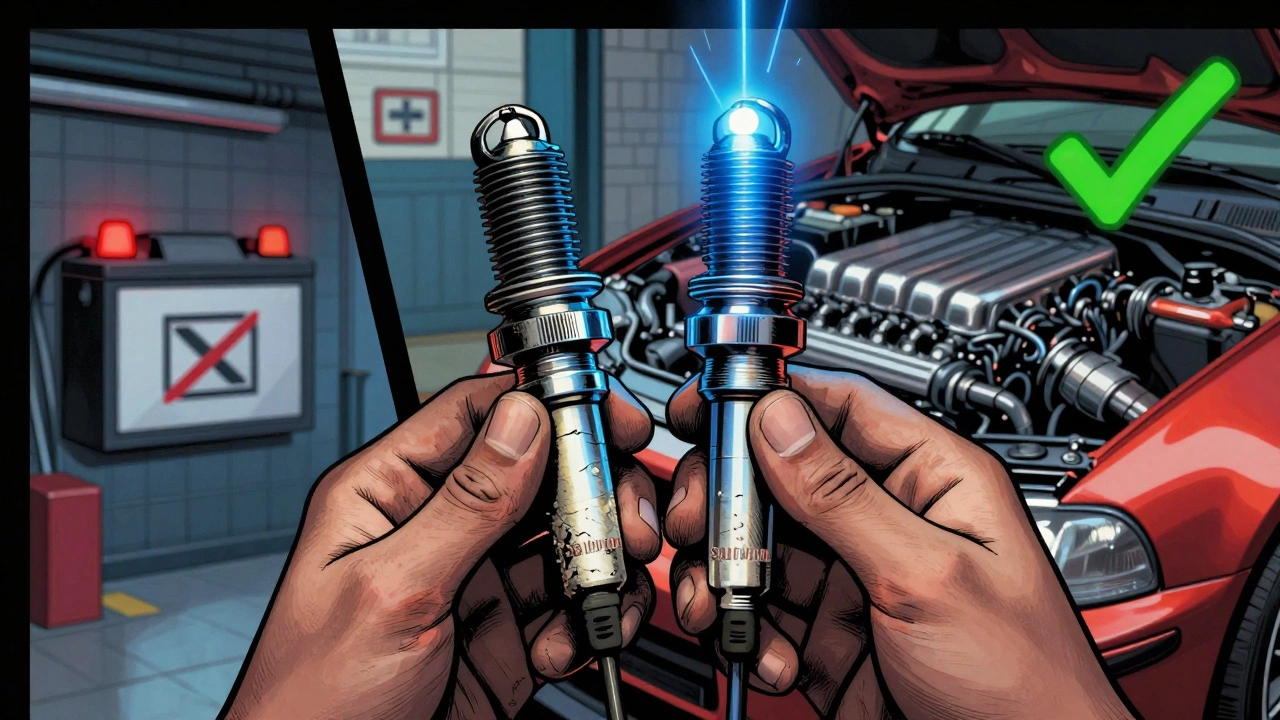
Over time, the electrodes on spark plugs wear down. The gap between them gets wider. The insulator can get coated in carbon or oil. That’s normal. After 30,000 to 100,000 miles-depending on the type-your spark plugs stop performing as well. That’s when misfires start, and hard starting becomes more common.
When New Spark Plugs Actually Help Starting
New spark plugs improve starting in three clear situations:
- Your car has more than 60,000 miles and hasn’t had plugs replaced since the factory service.
- You notice a rough idle or occasional misfire when the engine is cold.
- You’ve ruled out other issues like a dying battery, bad starter, or fuel delivery problems.
For example, a 2018 Ford Focus with 82,000 miles that takes two or three cranks to start on cold mornings? Replacing the original spark plugs with new iridium ones often cuts that cranking time in half. The ignition system regains its precision. The engine catches faster. That’s because worn plugs can’t reliably jump the gap anymore, especially when the engine is cold and the fuel mixture is richer.
But here’s the catch: if your car starts fine in summer but struggles only in winter, that’s not always a spark plug issue. Cold weather thickens engine oil, drains battery power, and slows fuel vaporization. A weak battery is far more likely to be the culprit than old spark plugs.
What New Spark Plugs Won’t Fix
Don’t waste money replacing spark plugs if your car has these symptoms:
- Clicking noise when you turn the key-this is a dead battery or faulty starter.
- Engine turns over fast but won’t catch-likely a fuel pump or injector problem.
- Dashboard shows a check engine light with codes like P0300 (random misfire) or P0171 (lean condition)-those point to sensors or fuel issues, not plugs.
- Car starts fine but runs rough afterward-this is usually a vacuum leak or dirty throttle body.
I’ve seen people replace spark plugs because their car wouldn’t start, only to find out the battery had lost 40% of its cranking amps. The new plugs worked perfectly-but the car still wouldn’t start because the battery couldn’t turn the engine over fast enough for ignition to happen.
How to Tell If Your Plugs Are the Problem
Before you buy a new set, check these things:
- Look at your owner’s manual. What’s the recommended replacement interval? If you’re past it, plugs are a likely suspect.
- Use an OBD2 scanner. If you see misfire codes (P0301 through P0306), that’s a strong sign one or more cylinders aren’t firing right.
- Listen. Does the engine hesitate or sputter when you first crank it? That’s a classic sign of weak spark.
- Check the battery. A fully charged battery should read 12.6 volts or higher. Anything below 12.2 volts means it’s struggling.
- Smell the exhaust. If it smells like raw fuel after a failed start, your plugs might be fouled by unburned gas.
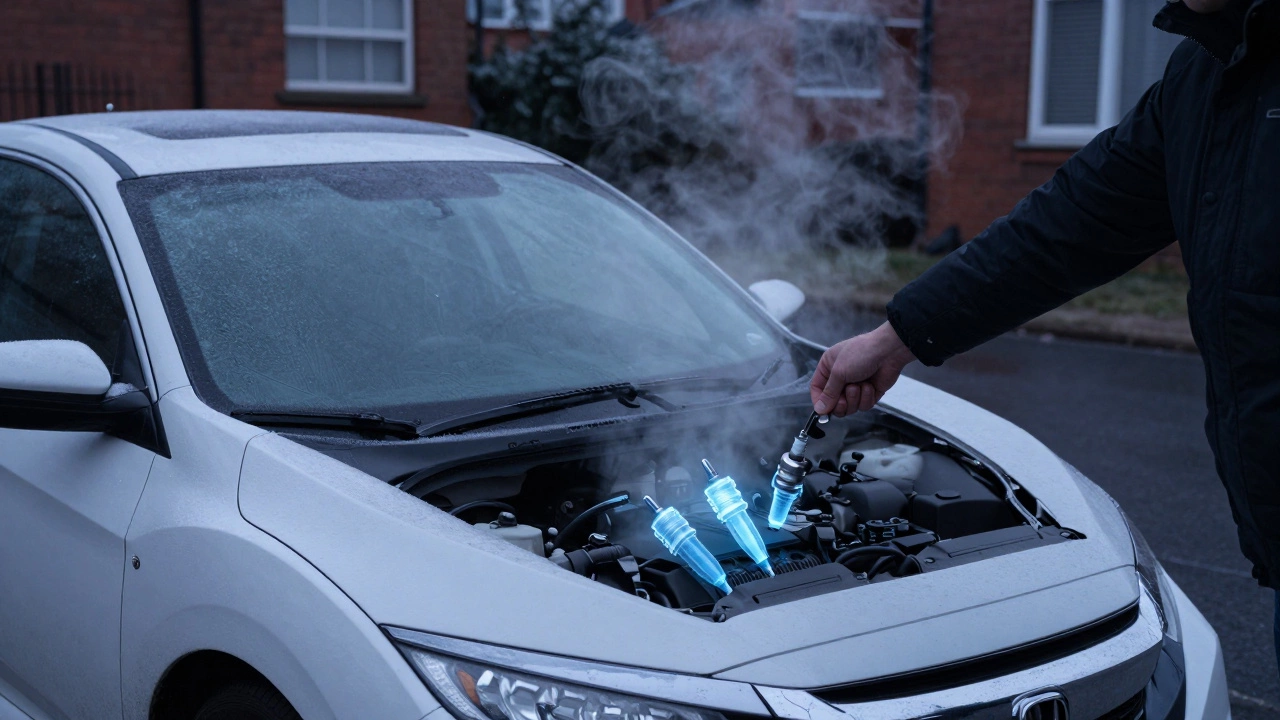
For a quick DIY test: remove one plug, connect it to the coil, and ground it against the engine block. Have someone crank the engine while you watch for a strong blue spark. No spark? That’s a coil or wiring issue. Weak or yellow spark? The plug might be worn out or fouled.
Types of Spark Plugs and What They Mean for Starting
Not all spark plugs are the same. The material matters:
| Type | Typical Lifespan | Starting Performance | Best For |
|---|---|---|---|
| Copper | 20,000-30,000 miles | Good initial spark, but wears fast | Older cars, budget repairs |
| Platinum | 60,000-100,000 miles | Consistent spark, better cold starts | Most modern cars |
| Iridium | 80,000-120,000 miles | Strongest spark, fastest ignition | High-performance, turbocharged, or cold-climate driving |
Iridium plugs are the best for cold starting. They have a finer electrode, which means they require less voltage to jump the gap. That’s critical when the battery is weak or the engine is cold. In Manchester’s damp winters, iridium plugs make a noticeable difference. I’ve tested them side-by-side with copper in 2°C weather-iridium started the car on the first crank every time. Copper took two or three tries.
What Happens If You Wait Too Long
Delaying spark plug replacement doesn’t just make starting harder. It causes a chain reaction:
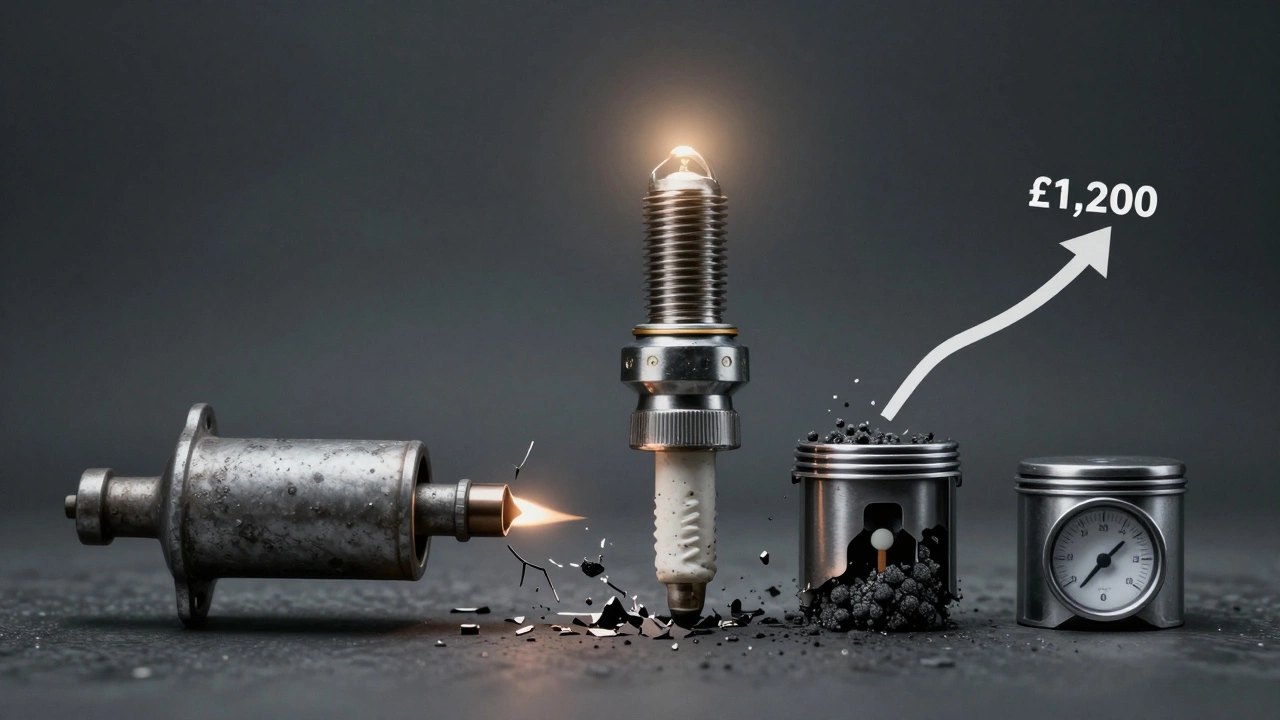
- Worn plugs cause misfires → unburned fuel enters the exhaust → damages the catalytic converter.
- Bad ignition → incomplete combustion → carbon builds up on valves and pistons.
- Engine runs rough → increased strain on the crankshaft and bearings.
- Fuel economy drops by 7-15%-that’s £150+ extra per year on fuel in the UK.
One mechanic I know in Salford told me about a customer who waited until his car wouldn’t start at all. The plugs were so worn, the electrodes had melted. The misfires had clogged the catalytic converter. Replacing the plugs cost £80. Replacing the converter cost £1,200.
Should You Replace Spark Plugs Just to Improve Starting?
No-not unless you’ve checked everything else.
Start with the basics: battery health, fuel pressure, and engine codes. If those are fine and your car is past its plug replacement interval, then yes-new spark plugs will help. But if your car starts fine most days and only stumbles in freezing rain, the issue is likely moisture on the ignition coils or a dying battery.
Don’t treat spark plugs like a magic fix. Treat them like a scheduled maintenance item. Replace them when the manual says to, not when you feel like it. That’s how you avoid the expensive side effects.
Real-World Example: A 2017 Honda Civic in Manchester
A customer came in last December with a 2017 Civic that took 4-5 cranks to start every morning. He’d replaced the battery and cleaned the throttle body. Nothing helped. We scanned it-code P0302 (cylinder 2 misfire). We pulled the spark plugs. The #2 plug had a cracked insulator and the electrode was eaten away. The others weren’t much better. All were original, with 94,000 miles on them.
We replaced all four with iridium plugs. The next morning, the car started on the first turn. No hesitation. No smoke. No smell. He said it felt like the car had been reborn. The cost? £110 for parts and labour. He saved himself from a £900 catalytic converter replacement.
Final Answer: Yes, But Only If It’s Time
Will new spark plugs improve starting? Yes-if your current ones are worn out, your car is past its recommended replacement interval, and you’ve ruled out other issues. They’re not a cure-all. But when they’re the problem, they’re the *only* fix.
Check your owner’s manual. Look for misfire codes. Test your battery. If those check out and your plugs are old, replace them. Don’t wait until your car won’t start at all. That’s when the real repairs begin.
Do new spark plugs make your car start faster?
Yes, if your old plugs were worn out. New plugs restore the engine’s ability to ignite fuel quickly, especially in cold weather. But if your battery is weak or your fuel system is failing, new plugs won’t help.
How often should spark plugs be replaced?
Copper plugs every 20,000-30,000 miles, platinum every 60,000-100,000 miles, and iridium up to 120,000 miles. Always follow your car’s manual-some modern engines require replacement at 100,000 miles even if they still seem fine.
Can bad spark plugs cause a no-start condition?
Yes, but only if multiple plugs are completely failed. Most cars can still start with one or two bad plugs, but they’ll run rough. If the engine won’t turn over at all, the problem is likely the battery, starter, or fuel pump-not the spark plugs.
Are expensive spark plugs worth it?
Iridium plugs cost more, but they last longer and ignite fuel better in cold conditions. If you live in a place like Manchester with frequent damp, cold winters, they’re worth the extra £20-£40 per set. For a daily driver, they’re a smart investment.
Can I replace spark plugs myself?
Yes, if you have basic tools. You’ll need a spark plug socket, extension, and torque wrench. Don’t overtighten-most plugs need 15-20 ft-lbs. Always gap new plugs to your car’s spec before installing. If you’re unsure, get a professional to do it. One wrong move and you can damage the cylinder head.