Air Filter Maintenance Calculator
1. What type of air filter do you have?
2. How do you drive?
Select your primary driving conditions
Most drivers never think about their air filter until the engine starts acting up. But skipping regular air filter care can cost you fuel, power, and even engine life. The big question? How often should you wash your air filter? The answer isn’t one-size-fits-all. It depends on what kind of filter you have, where you drive, and how hard your engine works.
Not All Air Filters Are the Same
Your car has two air filters - and they serve totally different jobs. The engine air filter sits in the engine bay and cleans the air going into your combustion chambers. The cabin air filter sits behind the glovebox and filters the air you breathe inside the car. Only the engine air filter can be washed. Cabin filters are disposable and must be replaced.
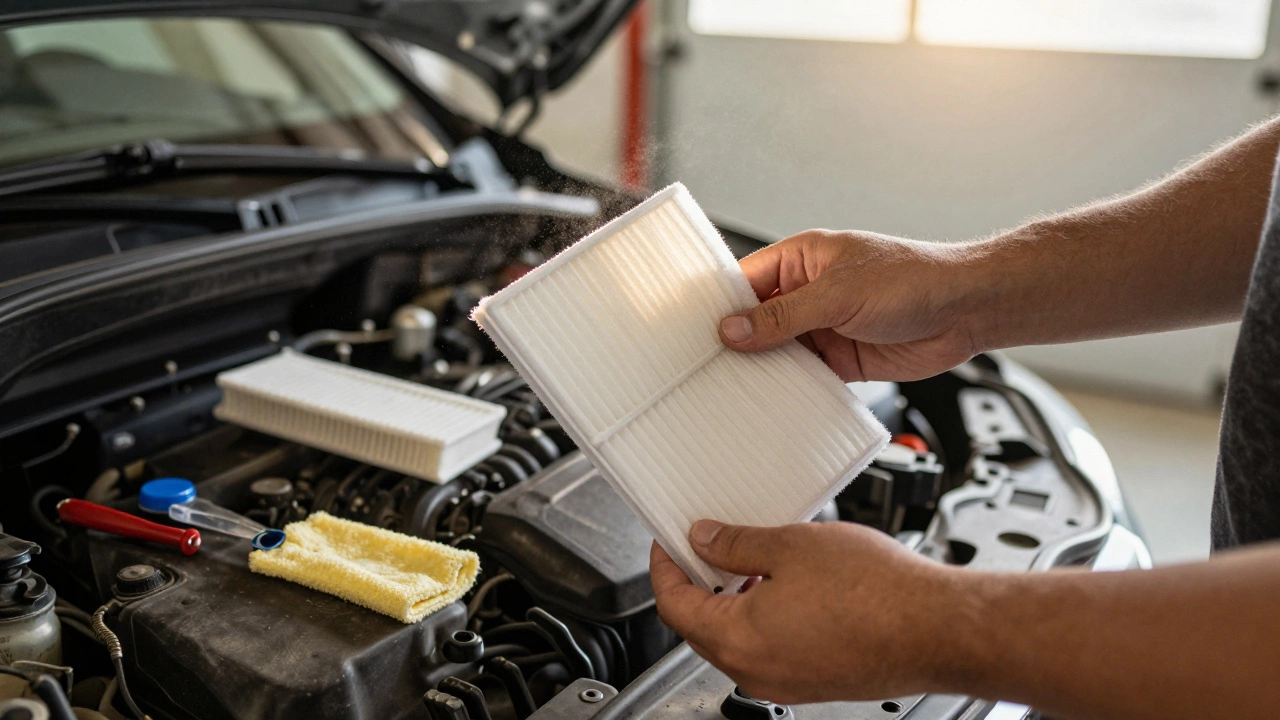
Engine air filters come in two main types: paper and reusable. Paper filters are the most common. They’re cheap and effective, but once they’re dirty, you throw them out. Reusable filters - usually made of cotton gauze or foam - are designed to be cleaned and reused. These are common in performance cars, off-road vehicles, and trucks. If your filter is reusable, washing it makes sense. If it’s paper? Just replace it.
When to Wash a Reusable Air Filter
Manufacturers typically say to clean a reusable air filter every 15,000 to 30,000 miles. But that’s just a starting point. If you drive mostly on quiet city roads with little dust, you might go the full 30,000 miles. If you drive on gravel roads, near construction sites, or in rural areas with dirt tracks? Clean it every 10,000 miles.
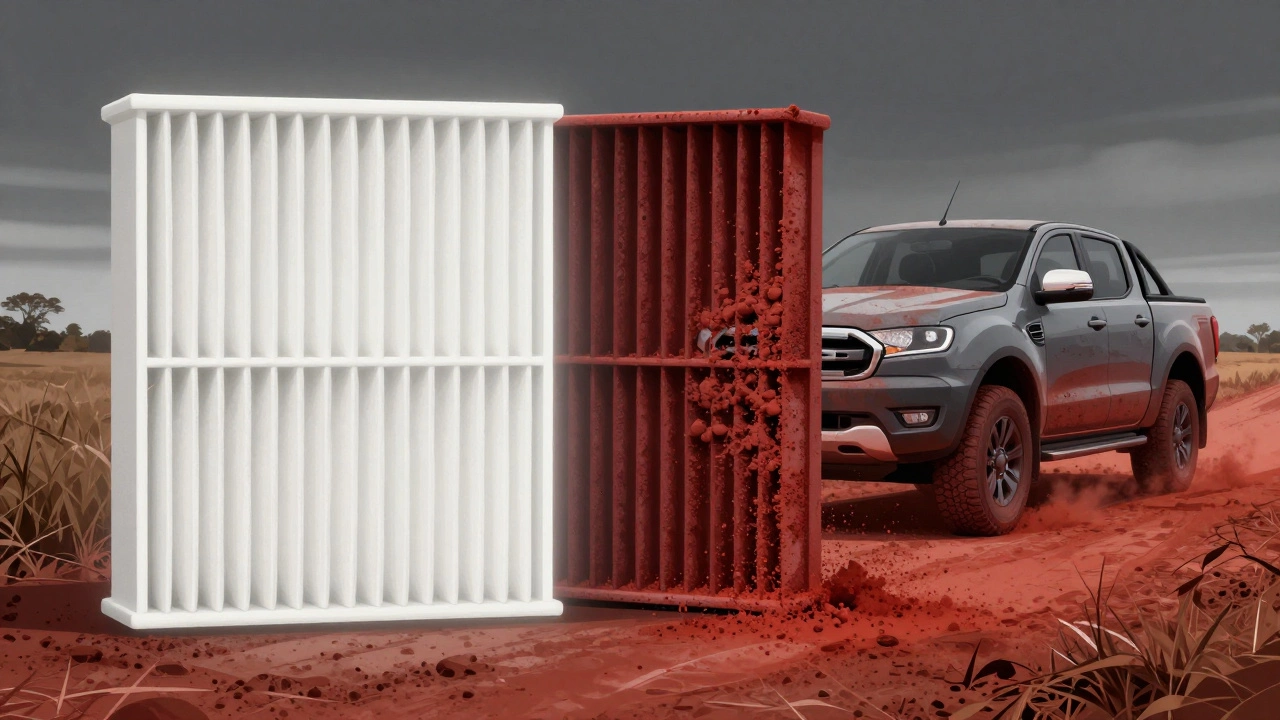
Here’s a real-world example from a Ford Ranger owner in rural Yorkshire. He drives 12,000 miles a year - 70% on unpaved farm tracks. He cleaned his filter at 9,500 miles. When he opened it, the filter was caked in fine red dust. He replaced it early. Two months later, his fuel economy improved by 4%. That’s not magic - it’s physics. A dirty filter forces your engine to work harder to pull in air, which burns more fuel.
Signs You Need to Wash (or Replace) Your Filter
You don’t need a ruler to know when it’s time. Watch for these clues:
- Your engine feels sluggish, especially when accelerating
- Idle is rough or the car stalls at stoplights
- Fuel economy drops noticeably - more than 5% from your usual average
- You hear a strange whistling or sucking noise from the engine bay
- The filter looks dark, clogged, or has visible dust buildup
Take the filter out. Hold it up to a bright light. If you can’t see light through it, it’s time to clean or replace. A lightly dusty filter? It’s probably fine. A filter that looks like a sponge full of dirt? Don’t wait.
How to Wash a Reusable Air Filter (Step-by-Step)
Washing a reusable filter isn’t rocket science, but doing it wrong can damage it. Here’s how to do it right:
- Remove the filter from the housing. Note how it sits - take a photo if needed.
- Use a filter cleaning kit (available at auto parts stores). Spray the cleaner on both sides, let it sit for 10 minutes.
- Rinse gently with lukewarm water. Never use a pressure washer. Don’t scrub - just let the water flow through.
- Let it air dry completely. This takes 12-24 hours. Don’t speed it up with a hairdryer or heater.
- Once dry, apply a small amount of filter oil evenly. Don’t soak it. Wipe off excess.
- Reinstall and secure the housing.
Skipping the oil step is a common mistake. The oil traps fine dust particles. Without it, the filter loses its effectiveness. Too much oil? It can contaminate your mass airflow sensor and trigger a check engine light.
What Happens If You Never Clean or Replace It?
Dirty air filters don’t just hurt performance - they hurt your engine. Over time, dust and debris can sneak past a clogged filter. That grit gets into your cylinders, scraping against pistons and valves. That’s not a myth - it’s a leading cause of premature engine wear.
A 2023 study by the Society of Automotive Engineers found that engines running with severely restricted air filters showed 17% more internal wear after 50,000 miles compared to those with clean filters. That’s not just a repair bill - it’s a potential engine replacement.
And don’t forget about emissions. A clogged filter can throw off your air-fuel ratio, causing your car to burn richer than it should. That means more carbon buildup, higher emissions, and a higher chance of failing your MOT.
What About Cabin Air Filters?
While you’re at it, check your cabin air filter. It doesn’t affect engine performance, but it affects your health. If you sneeze every time you turn on the AC, it’s probably clogged. Most manufacturers recommend replacing it every 12,000 to 15,000 miles - or once a year. In cities like Manchester, where traffic and pollution are high, you might want to do it every 10,000 miles.
Cabin filters trap pollen, dust, and even exhaust fumes. If you’ve got allergies or drive with kids, don’t wait until it smells bad. Replace it early. A clean cabin filter makes the air inside feel fresher, and that’s worth more than you think.
When to Replace Instead of Wash
Not every filter is washable. If you have a paper filter - and most do - you don’t wash it. You replace it. Paper filters are cheaper than reusable ones, but they’re single-use. Replacing one costs between £10 and £25. It takes 10 minutes. You don’t need tools. Just open the housing, slide out the old one, slide in the new one.
Replace it every 12,000 to 15,000 miles. If you drive in dusty conditions, go every 10,000. Many people wait until the filter looks dirty. That’s too late. A filter can be 80% clogged before you can see it. Stick to the mileage schedule.
Pro Tip: Keep a Log
Write down the date and mileage every time you clean or replace your air filter. Keep it in your glovebox. You’ll thank yourself when it’s time for your next service. It also helps if you sell the car - buyers love a well-documented maintenance history.
Set a reminder on your phone. Say, ‘Change air filter’ every 10,000 miles. Or use a free app like Carfax or MyCar. Most modern cars don’t remind you about air filters - you have to be the one to remember.
Final Answer: How Often Should You Wash Your Air Filter?
If you have a reusable engine air filter: clean it every 10,000 to 15,000 miles - or sooner if you drive in dusty conditions. Let it dry fully. Re-oil it. Reinstall.
If you have a paper engine air filter: replace it every 12,000 to 15,000 miles. No washing. No exceptions.
If you’re unsure what filter you have: look at the owner’s manual. Or take a photo of the filter and search the brand and model online. Most manufacturers list whether it’s washable.
And don’t forget the cabin air filter. Replace it annually - especially if you live in a city or drive a lot. Clean filters mean better fuel economy, smoother performance, and a longer engine life. It’s one of the cheapest things you can do to keep your car running right.