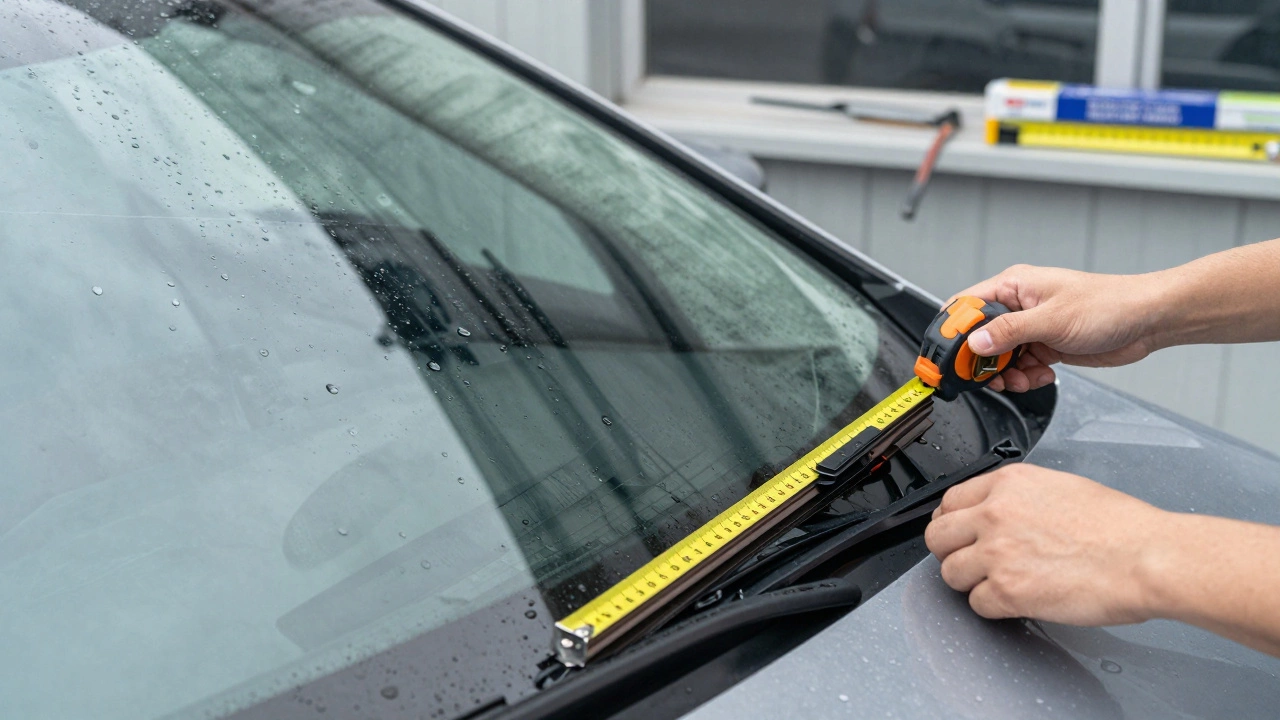
Windshield Wiper Size Calculator
It’s raining again. You turn on your windshield wipers, and they smear, chatter, or leave streaks across the glass. You know it’s time to replace them-but now you’re stuck. What size do you need? Are rubber blades better than silicone? Do you need a special type for your car? It’s not as confusing as it seems. Knowing what windshield wipers to buy comes down to three things: your car’s make and model, the right size, and the type of blade that fits your driving conditions.
Start with your car’s exact make, model, and year
You can’t just walk into a store and grab the first wiper blade that looks right. Windshield wipers aren’t one-size-fits-all. A 2018 Ford Focus needs different blades than a 2023 Toyota RAV4. Even two cars from the same year but different trims can have different wiper sizes. The easiest way to find out what you need is to check your owner’s manual. It usually has a section on replacement parts, including wiper blade lengths.
If you don’t have the manual, look up your car online. Most major retailers like Halfords, Autocar, or Amazon have wiper blade fitment tools. Just type in your car’s make, model, and year, and it tells you the exact sizes for both driver and passenger sides. Don’t assume they’re the same-many cars use different lengths. For example, a Volkswagen Golf Mk7 might need a 24-inch blade on the driver’s side and a 19-inch on the passenger’s.
Measure your current blades if you’re unsure
If your wipers are still on the car and you can’t find the specs, measure them. Pull the wiper arm away from the windshield so it’s upright. Use a tape measure from the hole at the end of the blade (where it connects to the arm) to the very tip of the rubber. Write down both measurements. This is your exact size.
Don’t round up or down. A 21.5-inch blade won’t fit properly if you buy a 22-inch one. Too long, and the blade might hit the hood or the edge of the windshield. Too short, and it won’t clear enough area, leaving blind spots. Precision matters.
Understand the three main types of wiper blades
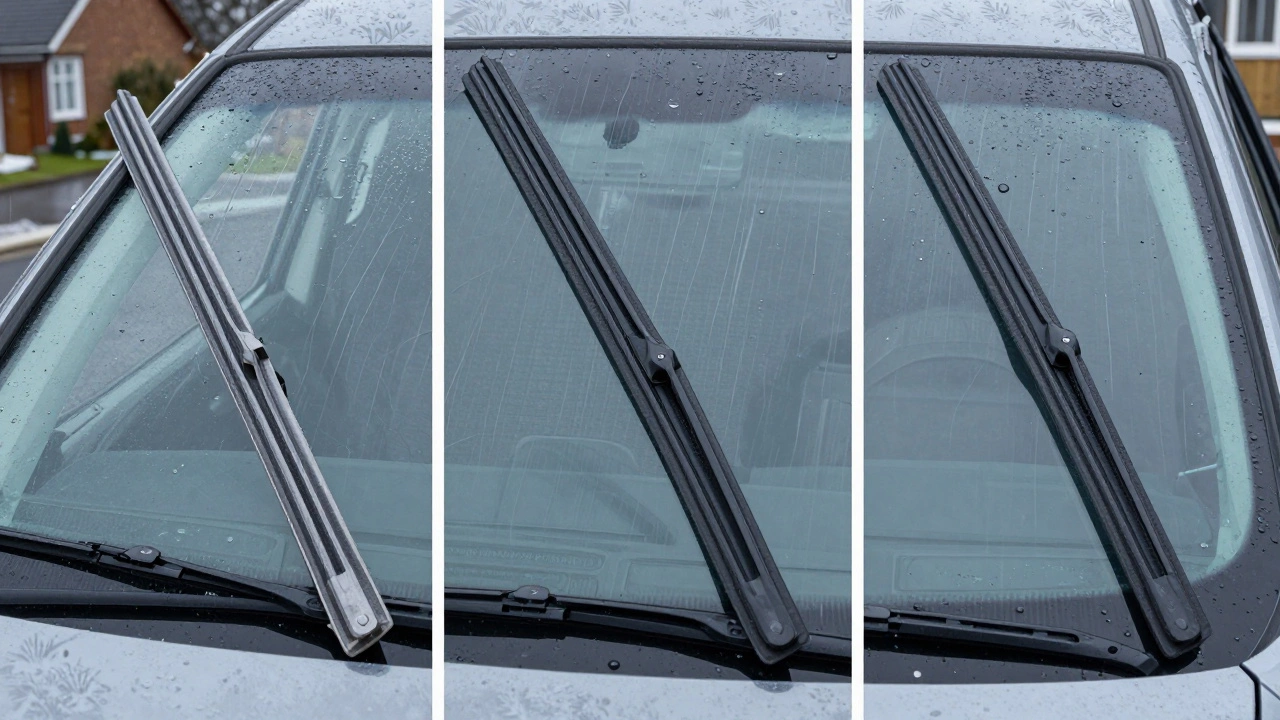
Not all wiper blades are made the same. There are three main types you’ll see on the shelf: conventional, beam, and hybrid.
- Conventional blades are the old-school style with a metal frame holding the rubber. They’re cheap, easy to find, and work fine in mild weather. But in heavy snow or ice, the frame can collect debris and freeze up.
- Beam blades have no metal frame. Instead, they use a solid, curved spine that presses evenly across the glass. They’re more aerodynamic, resist snow buildup, and perform better in winter. Most modern cars come with these from the factory.
- Hybrid blades mix the best of both: a beam-style spine with a light frame for added stability. They’re great if you live somewhere with changing weather-like Manchester, where you get rain, sleet, and occasional frost all in one week.
For UK drivers, beam or hybrid blades are the smart pick. They handle the damp, chilly conditions better and last longer than conventional ones. You’ll pay a bit more upfront, but you’ll notice the difference in visibility during heavy downpours.
Check the material: rubber vs. silicone
The rubber part of the blade is what actually wipes the glass. Most blades use natural or synthetic rubber. Rubber works well, but it hardens over time, especially in cold weather. That’s why your wipers start squeaking after six months.
Silicone blades are newer. They stay flexible in freezing temps and resist UV damage better. They also leave less streaking and last up to 50% longer than rubber. Brands like Bosch ICON and Rain-X Latitude use silicone. If you want blades that last two years instead of one, go for silicone. They’re pricier, but you won’t need to replace them as often.
Don’t ignore the connector type
Even if you get the right size and material, the blade won’t fit if the connector doesn’t match your wiper arm. There are at least a dozen different attachment styles: hook, pin, side-lock, bayonet, and more. Most modern cars use the J-hook style-it’s the most common in the UK.
When you buy blades, the packaging will show which connector types they fit. Look for a diagram or list of compatible vehicles. If you’re buying online, check the product details for the connector type. If you’re unsure, take a photo of your current wiper arm and show it to a shop assistant. They’ve seen every type.
Replace both blades at the same time
It’s tempting to only replace the one that’s smearing. But if one blade is worn out, the other isn’t far behind. Wiper blades degrade at the same rate. Using mismatched blades means uneven wiping-one side clears perfectly, the other leaves streaks. That’s dangerous, especially at night or in heavy rain.
Always replace them as a pair. It’s cheaper in the long run, and you’ll get consistent performance. Most packs come with two blades, so you’re covered.
Buy from reputable brands
There are hundreds of wiper brands. Some are okay. A few are terrible. Stick to names you trust: Bosch, Michelin, Valeo, Rain-X, Trico, and Denso. These brands test their blades in real-world conditions, including UK weather. They also offer warranties-some up to two years.
Avoid no-name blades sold in discount stores or on marketplaces without reviews. They often use low-quality rubber, have poor fitment, and wear out in weeks. You’re not saving money-you’re just buying worse visibility.
When to replace your wipers
Don’t wait until they’re completely useless. Replace them if you notice:
- Streaking or smearing after a single pass
- Chattering or skipping across the glass
- Cracked, split, or hardened rubber
- Missing sections of the wiping edge
Most manufacturers recommend replacing wipers every 6 to 12 months. But if you drive a lot in rain, snow, or dusty conditions, swap them out every 6 months. In the UK, winter is the worst time for wiper wear. If you haven’t changed them since last spring, it’s time.
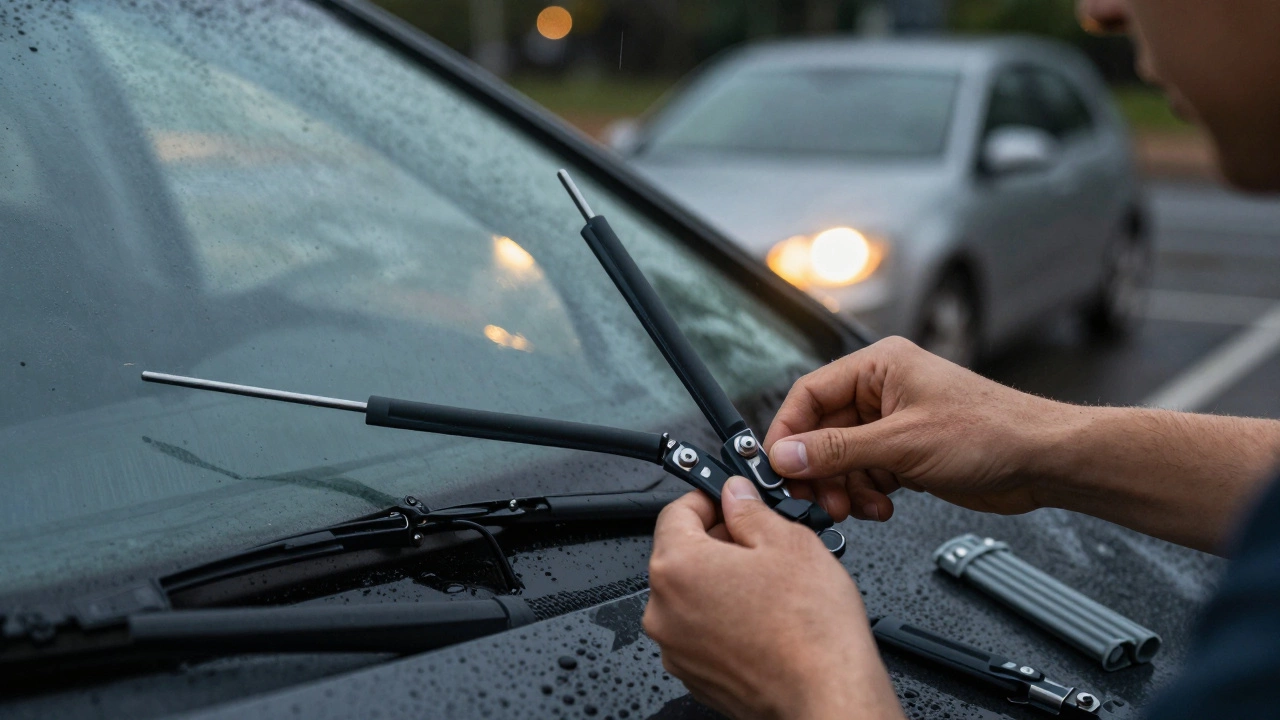
Installation is simple-no tools needed
Changing wiper blades takes less than five minutes. No wrenches, no special skills. Most blades snap on with a simple click. Pull the old blade away from the arm until it releases. Slide the new one onto the hook or pin until you hear it lock. Give it a gentle tug to make sure it’s secure.
Don’t let the wiper arm snap back onto the windshield. Hold it gently as you lower it. If you accidentally crack the glass, you’ll be spending a lot more than the price of two blades.
Test them before you drive off
After installing new blades, turn on the washer fluid and run them a few times. Look for smooth, even movement. No noise, no gaps. If you see streaks, the blade might not be seated right. Take it off and reattach it. Sometimes, a small misalignment causes problems.
And don’t forget to clean the windshield first. Dirt and grime on the glass can scratch new blades. Use a glass cleaner and a microfiber cloth. A clean surface means better contact and longer blade life.
What about winter blades?
If you live in northern parts of the UK or get frost and snow regularly, consider winter-specific blades. These have a rubber boot that covers the frame to stop ice buildup. Brands like Bosch Arctic and Michelin Guardian offer these. They’re not necessary for everyone, but if you’ve ever had your wipers frozen to the glass, you’ll know the value.
Winter blades cost a bit more, but they work better in freezing conditions and reduce the risk of damage to the arm or motor.
Final tip: Keep a spare set
Wiper blades can break unexpectedly. A tree branch, a hailstorm, or even a careless car wash can damage them. Keep a spare pair in your boot. You never know when you’ll need them. It’s a small thing that saves a lot of stress.
Knowing what windshield wipers to buy isn’t about guesswork. It’s about matching the right size, type, and brand to your car and your weather. Do that, and you’ll get clear visibility-every time it rains.