Air Filter Health Checker
Answer the questions below to determine if it is time to replace your engine air filter.
Recommendation
--Why?
You’re driving along the M60, and suddenly the car feels sluggish. You press the accelerator, but the response is delayed, like the engine is holding its breath. Or maybe you notice a strange smell when you turn on the AC, or your fuel gauge drops faster than usual. These aren’t just random annoyances; they are often clear signals that your air filter is doing more harm than good.
Most drivers ignore this component until it’s too late. We tend to think of engines as complex machines requiring expensive diagnostics, but sometimes the fix is a £15 part and ten minutes of work. An air filter acts as the lungs of your vehicle, trapping dust, pollen, and debris before they enter the combustion chamber. When these filters get clogged, the engine starves for oxygen. The result? Poor performance, wasted money, and potential long-term damage. But how do you know exactly when it’s time to swap it out? Is it based on mileage, appearance, or sound? Let’s break down the concrete signs that tell you it’s replacement time.
The Visual Inspection: What Does a Bad Filter Look Like?
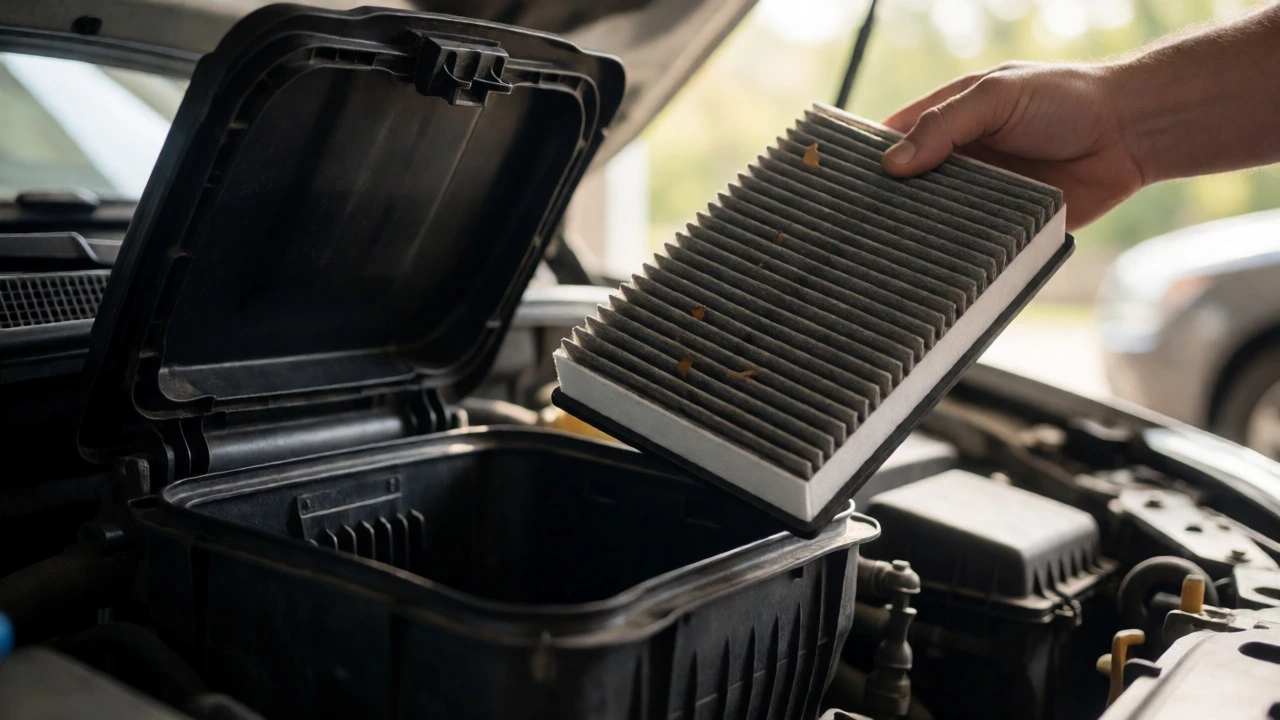
The most direct way to check is to look at it. You don’t need a mechanic’s eye to spot a failed filter. Locate the air filter housing-usually a black plastic box near the top of the engine bay-and pop the clips or screws to open it. Pull the filter out carefully.
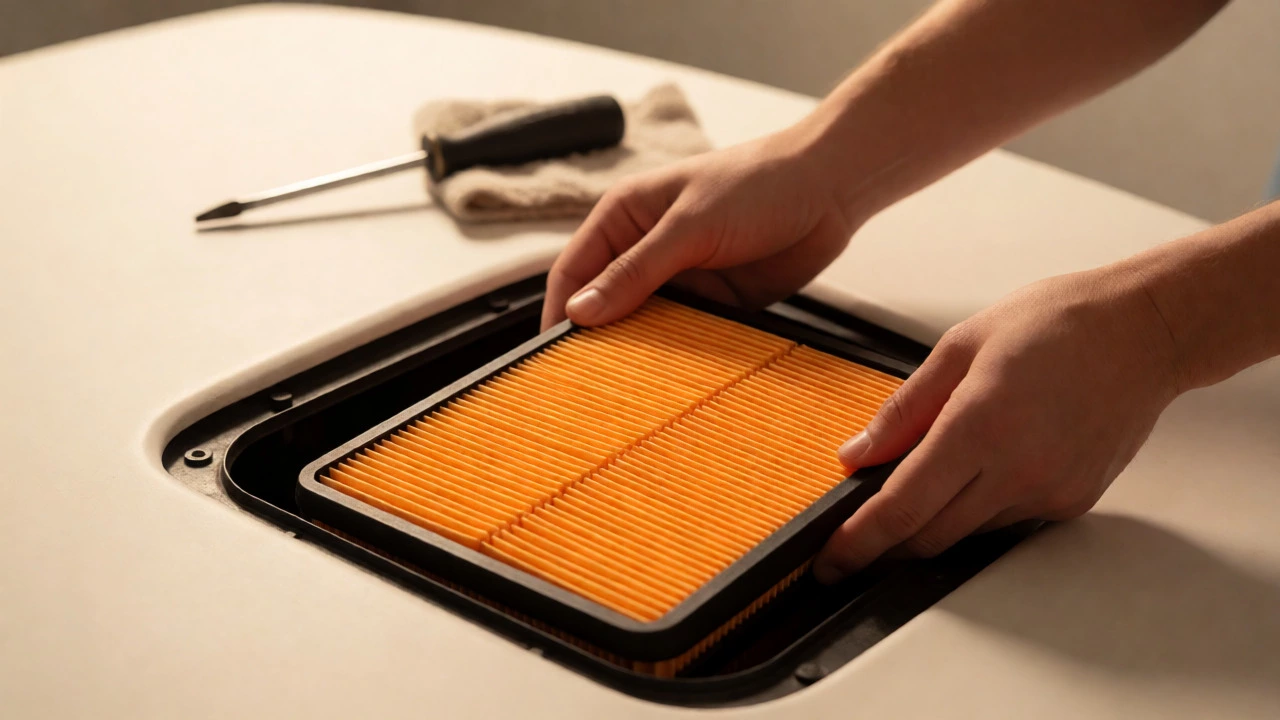
A new engine air filter typically has a clean, uniform color (white, yellow, or orange depending on the material) with distinct pleats. A dirty one looks completely different. Here is what to look for:
- Darkening: If the paper media has turned dark gray or black, it’s saturated with soot and dirt.
- Debris Accumulation: Visible leaves, insects, or large clumps of dust stuck between the pleats indicate poor filtration flow.
- Oil Saturation: In some turbocharged cars, oil mist can coat the filter. If it feels greasy and heavy, it’s compromised.
- Damaged Pleats: Check if the folds are collapsed or crushed. This restricts airflow even if the filter doesn’t look overly dirty.
If you hold the filter up to a bright light or sunlight, can you see through it? A healthy filter allows light to pass through the media. If it blocks all light, the pores are blocked. That’s your cue to replace it immediately. Don’t try to blow it out with compressed air unless you know what you’re doing; high pressure can tear microscopic fibers, creating gaps where dirt slips straight into the engine.
Performance Symptoms: How Your Car Tells You It’s Hungry
Your dashboard might not have a specific "Check Air Filter" light, but your car communicates distress through behavior. When the filter is clogged, the air-to-fuel ratio gets messed up. The engine control unit (ECU) tries to compensate by injecting more fuel, leading to a rich mixture. This causes noticeable changes in how the vehicle drives.
One of the first things you’ll feel is a lack of acceleration power. You step on the gas, expecting a surge, but the car responds slowly. It feels labored, especially when climbing hills or merging onto motorways. This happens because the engine cannot draw in enough air to burn the fuel efficiently. It’s like trying to run while breathing through a thin straw.
Another common sign is rough idling. When you stop at traffic lights, does the engine shake or sputter? A restricted air supply can cause the engine to struggle to maintain a steady RPM at low speeds. You might also hear unusual noises from the engine bay, such as popping or backfiring, which occur when unburned fuel exits the exhaust due to incomplete combustion.
| Symptom | Likely Cause Related to Air Filter | Action Required |
|---|---|---|
| Sluggish Acceleration | Restricted airflow reduces power output | Inspect and replace filter |
| Reduced Fuel Economy | Rich fuel mixture compensates for low air | Replace filter and monitor MPG |
| Black Smoke from Exhaust | Unburnt fuel due to poor combustion | Immediate inspection needed |
| Check Engine Light | Mass Air Flow sensor detects irregularities | Scan codes, then check filter |
Fuel Efficiency: The Silent Wallet Hit
Do you find yourself visiting petrol stations more often than last year? While many factors affect fuel consumption, a dirty air filter is a silent culprit. According to data from the US Department of Energy, replacing a clogged air filter can improve acceleration by up to 11% and fuel economy by up to 14% in older vehicles. Modern cars with electronic fuel injection are smarter about adjusting the mixture, so the savings might be smaller-perhaps 3-5%-but they are still real.
Think of it this way: if your car is burning more fuel to go the same distance, you are literally paying for air that isn’t getting into the engine. Over a year of commuting in Manchester, those extra litres add up. If your mileage has dropped noticeably without any other mechanical issues, checking the air filter is a cheap diagnostic step before assuming worse problems like injector faults.

Cabin Air Filters: The Health Hazard You Can Smell
It’s important to distinguish between the engine air filter and the cabin air filter. The cabin filter cleans the air entering the passenger compartment. It’s crucial for health, especially if you suffer from allergies or asthma. Unlike the engine filter, you won’t feel performance loss if this one fails, but you will notice comfort issues.
The most obvious sign is odour. If you turn on the heating or AC and get a musty, damp, or dusty smell, the filter is likely mouldy or packed with organic matter. Another sign is reduced airflow from the vents. Even on the highest fan setting, the breeze feels weak. This happens because the filter is so clogged that it blocks the blower motor’s ability to push air through.
In the UK, where damp weather is common, cabin filters can become breeding grounds for bacteria and fungi. If you sneeze more inside the car than outside, or if windows fog up quickly despite using the defroster, inspect the cabin filter. It’s usually located behind the glovebox or under the windscreen wiper area. Replacing it takes five minutes and costs little, but it significantly improves air quality.
Mileage Guidelines vs. Real-World Conditions
Car manufacturers provide service intervals, often suggesting air filter replacements every 15,000 to 30,000 miles. However, these numbers are averages based on ideal conditions. Your driving environment matters immensely.
If you drive primarily on clean, smooth motorways, your filter might last longer. But if you commute through construction zones, rural dirt roads, or heavily polluted city centres, it will clog much faster. Living in a coastal area introduces salt spray, which can degrade filter materials quicker. Similarly, driving in areas with high pollen counts during spring can overload the filter in weeks rather than months.
A practical rule of thumb: inspect the filter every time you have an oil change. Since oil changes happen regularly, it’s easy to remember. Don’t wait for the scheduled service date if you suspect issues. Visual inspection trumps mileage counters. If it looks bad, change it. If it looks clean after 20,000 miles, you can likely leave it another interval.
The Cost of Neglect: Why Waiting Isn’t Worth It
Some drivers delay replacement to save a few pounds. They think, "It’s just a piece of paper." But neglecting the air filter leads to cascading problems. Dirt particles that slip past a worn filter act like sandpaper inside the engine cylinders. Over time, this causes premature wear on piston rings and cylinder walls. Repairing internal engine damage costs hundreds, whereas a filter costs less than a takeaway dinner.
Additionally, a severely clogged filter can damage sensitive sensors like the Mass Air Flow (MAF) sensor. If the MAF sensor gets coated in dirt or oil, it sends incorrect data to the ECU, triggering warning lights and costly diagnostic fees. By staying proactive, you protect the entire intake system. It’s preventive maintenance at its simplest and most effective level.
DIY Replacement: Step-by-Step Guide
Replacing an air filter is one of the easiest DIY tasks. You rarely need special tools-often just a screwdriver or a socket set. Here is how to do it safely:
- Park and Cool Down: Ensure the engine is off and cool to the touch.
- Locate the Housing: Follow the large rubber hose from the throttle body to the plastic box.
- Open the Clips: Release the metal clips or remove the screws securing the lid.
- Remove Old Filter: Lift it out gently. Note the orientation (which side faces up).
- Clean the Housing: Wipe out any leaves or debris from the bottom of the box with a damp cloth. Do not use compressed air directly on the housing if it risks blowing dirt into the intake tube.
- Install New Filter: Place the new filter in the same orientation. Ensure it seats evenly in the groove.
- Close and Secure: Snap the lid back on and tighten screws/clips. Make sure there are no gaps where unfiltered air can leak in.
Always double-check the fit. A poorly seated filter allows unfiltered air to bypass the media, rendering the replacement useless. After installation, start the engine and listen for any whistling sounds, which might indicate an air leak.
When to Seek Professional Help
While most replacements are straightforward, some modern cars have complex air intake systems. If your filter housing is buried deep in the engine bay or requires removing multiple components, it might be worth paying a professional. Also, if you’ve replaced the filter but performance issues persist, the problem might lie elsewhere-such as a faulty spark plug, clogged fuel injectors, or a vacuum leak. A mechanic can perform a smoke test to identify leaks that mimic air filter symptoms.
Can I drive with a dirty air filter?
Yes, you can drive with a dirty air filter for a short period, but it is not recommended. It will reduce engine efficiency, lower fuel economy, and may cause rough idling. Long-term driving with a severely clogged filter can lead to engine deposits and increased wear on internal components.
How often should I replace my air filter?
Manufacturer recommendations vary, but a general guideline is every 15,000 to 30,000 miles. However, visual inspection is better than strict mileage. If you drive in dusty or urban environments, check it every 10,000 miles or during every oil change.
Does a dirty air filter cause the check engine light to come on?
Directly, no. There is no sensor specifically for the air filter condition. However, a very dirty filter can alter the air-fuel ratio enough to trigger the Mass Air Flow (MAF) sensor or oxygen sensors, which can indirectly cause the check engine light to illuminate.
What is the difference between an engine air filter and a cabin air filter?
The engine air filter cleans air going into the engine for combustion. The cabin air filter cleans air entering the passenger compartment via the HVAC system. They are separate components with different functions and replacement schedules.
Can cleaning an air filter restore its performance?
For standard paper filters, cleaning is generally not recommended as it can damage the micro-pores. High-performance cotton gauze filters (like K&N) are washable and reusable. Always check the manufacturer's instructions for your specific filter type.