Brake Pad Replacement Advisor
Enter Your Brake Measurements
Enter your details to see if you need a full set replacement or just one axle, along with the estimated cost.
Picture this: you’re driving down the M6 near Manchester, rain lashing against your windscreen. You tap the brakes to slow for a junction, and instead of that reassuring, solid stop, the car feels spongy. The steering wheel vibrates slightly. Your heart skips a beat. This is exactly why understanding how to replace brake pads is critical for vehicle safety and performance on British roads isn’t just about saving money-it’s about staying alive.
The short answer to "is it better to change all 4 brake pads?" is yes, but with a major caveat. You should always replace brake pads in pairs (both fronts or both rears), but replacing all four at once is only necessary if the wear levels are similar across the board. Doing unnecessary work costs you time and cash, while doing too little compromises your safety. Let’s break down the mechanics so you can make the right call for your specific car.
How Braking Systems Actually Work
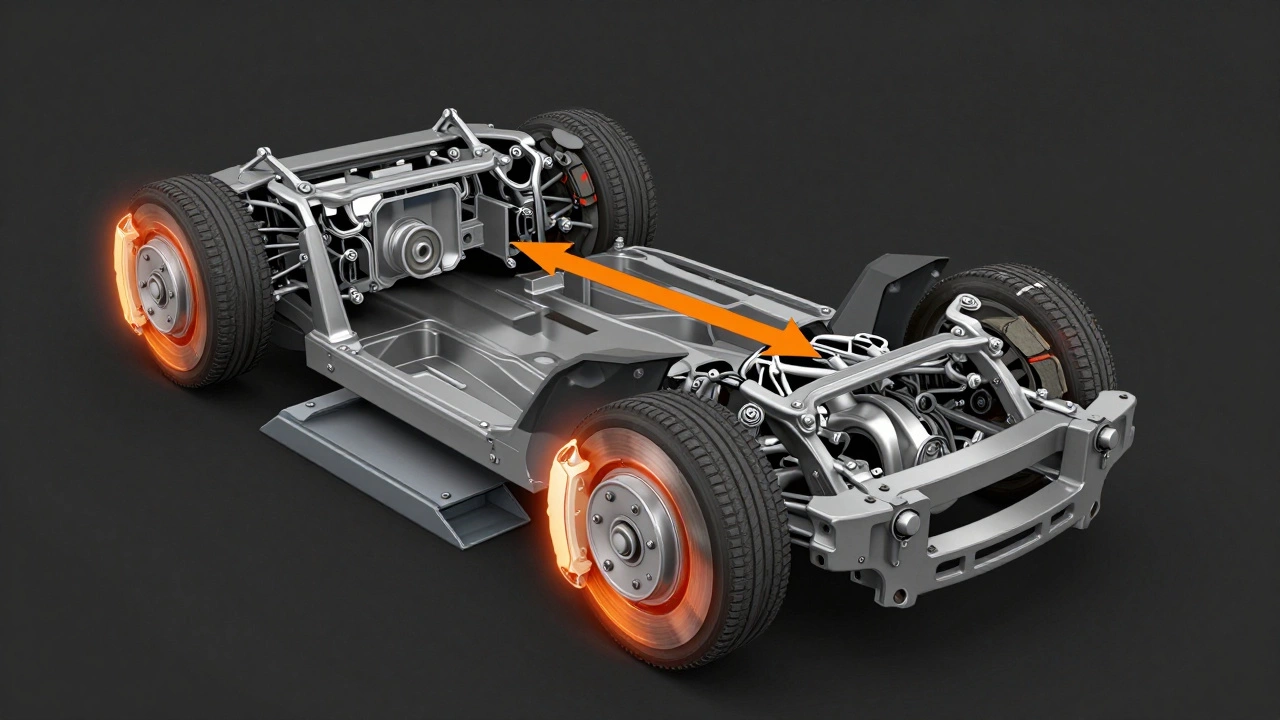
To understand why we don't always swap all four pads, you need to know how weight shifts when you stop. When you slam on the brakes, physics takes over. Your car’s momentum pushes forward, causing the vehicle’s weight to transfer heavily to the front axle. In most standard passenger cars, up to 70-80% of the braking force happens at the front wheels.
This means your front brake pads do the heavy lifting. They generate more heat, experience higher friction, and wear down significantly faster than the rear pads. If you check your front pads every 12 months, you might find them at 3mm thickness (the legal minimum in the UK is often considered 1.5mm, though many recommend changing at 3mm for safety). Meanwhile, your rear pads might still have 8mm of material left. Swapping those healthy rear pads just because the fronts are worn is like throwing away half-full milk cartons just because one is empty.
| Factor | Front Brake Pads | Rear Brake Pads |
|---|---|---|
| Average Lifespan | 20,000 - 40,000 miles | 30,000 - 60,000 miles |
| Braking Force Contribution | 60% - 80% | 20% - 40% |
| Heat Generation | High | Moderate |
| Replacement Frequency | More Frequent | Less Frequent |
When Should You Replace All Four?
There are specific scenarios where swapping all four pads makes perfect sense. Ignoring these signs can lead to uneven braking, which is dangerous, especially in wet UK conditions.
- Similar Wear Levels: If your mechanic measures your front pads at 4mm and your rear pads at 5mm, they are close enough. Replacing all four ensures balanced braking performance from day one. You won’t have to book another appointment in six months for the rears.
- High-Mileage Vehicles: If your car has done over 80,000 miles and hasn’t had a full brake service in years, it’s likely both sets are nearing the end of their life. While the fronts will be worse, the rears might be dangerously thin too.
- Performance Driving: If you drive aggressively or tow heavy trailers, the rear brakes work harder than in normal city driving. In these cases, wear rates equalize, making a full set replacement logical.
- New Car Break-in: Some manufacturers recommend replacing all four pads during the first major service if the initial set was glazed or improperly bedded, ensuring consistent feel throughout the chassis.
The Risks of Mixing Old and New Pads
You might wonder, "Can I just change the fronts now and wait six months for the rears?" Absolutely. This is the standard practice for most drivers. However, there is a risk if you try to mix old pads with new ones on the same axle. Never replace just one pad on the left or right side. Always do pairs.
If you replace the fronts but leave severely worn rears, your Anti-lock Braking System (ABS) and Electronic Stability Control (ESC) may behave unpredictably. These systems rely on sensors that detect wheel speed. If the rear brakes grab suddenly because the pads are unevenly worn or glazed, the ESC might think you’re skidding and cut power to the engine or apply brakes incorrectly. This can cause a loss of control rather than preventing it.
Furthermore, new brake pads require a bedding-in period. They need to transfer a thin layer of material onto the brake discs to create optimal friction. If your rear pads are old and glazed, they won’t bite the same way as the fresh fronts. This leads to a "nose-dive" sensation where the car stops abruptly but feels unbalanced. For peace of mind, ensure any remaining pads are in good health before fitting new ones.
Cost-Benefit Analysis: DIY vs. Garage
Let’s talk numbers. In the UK, labour costs for mechanics vary, but a typical garage might charge £80-£120 per axle for parts and labour. So, doing just the fronts costs around £100. Doing all four could jump to £200-£250.
If you’re handy with tools, buying a set of ceramic or semi-metallic brake pads online might cost you £30-£50 per axle. That’s £60-£100 total for all four sets. If your rear pads have 6mm of life left, spending an extra £50 on parts and two hours of your Saturday to change them is a poor return on investment. Save that money. But if the rears are at 3mm, doing them all at once saves you the hassle of jacking up the car again next month.
Consider also the cost of brake discs. Often, when pads wear out, they score the discs. If the discs are warped or below minimum thickness, you must replace them too. Discs are usually changed in pairs. If you’re already paying for labour to change the front discs, adding the rear disc/pad job might get you a discounted labour rate from some garages, making the "all four" option financially smarter.
Signs Your Brakes Need Attention Now
Don’t wait for a scheduled service to check your brakes. Listen to your car. Here are the red flags that mean you need to inspect your pads immediately, regardless of mileage:
- Squealing or Screeching: Most modern pads have a small metal tab called a wear indicator. When the pad wears down to a critical level, this tab scrapes against the disc, creating a high-pitched noise. It’s designed to annoy you into action.
- Grinding Noise: If you hear a metallic grinding sound, the pad material is gone, and metal is rubbing against metal. This damages your discs severely and requires immediate repair. You’ve likely been driving unsafe for a while.
- Vibration in the Steering Wheel: This usually indicates warped front brake discs. It can happen if you brake hard after heavy use without letting them cool. Warped discs reduce stopping power and comfort.
- Pulling to One Side: If your car pulls left or right when braking, one caliper might be stuck, or one set of pads is wearing faster than the other. This is a serious safety issue requiring diagnostic attention.
- Soft Brake Pedal: If the pedal goes closer to the floor than usual, you might have air in the brake lines or leaking fluid. This is not a pad issue but a hydraulic system failure. Do not drive until fixed.
Choosing the Right Brake Pads
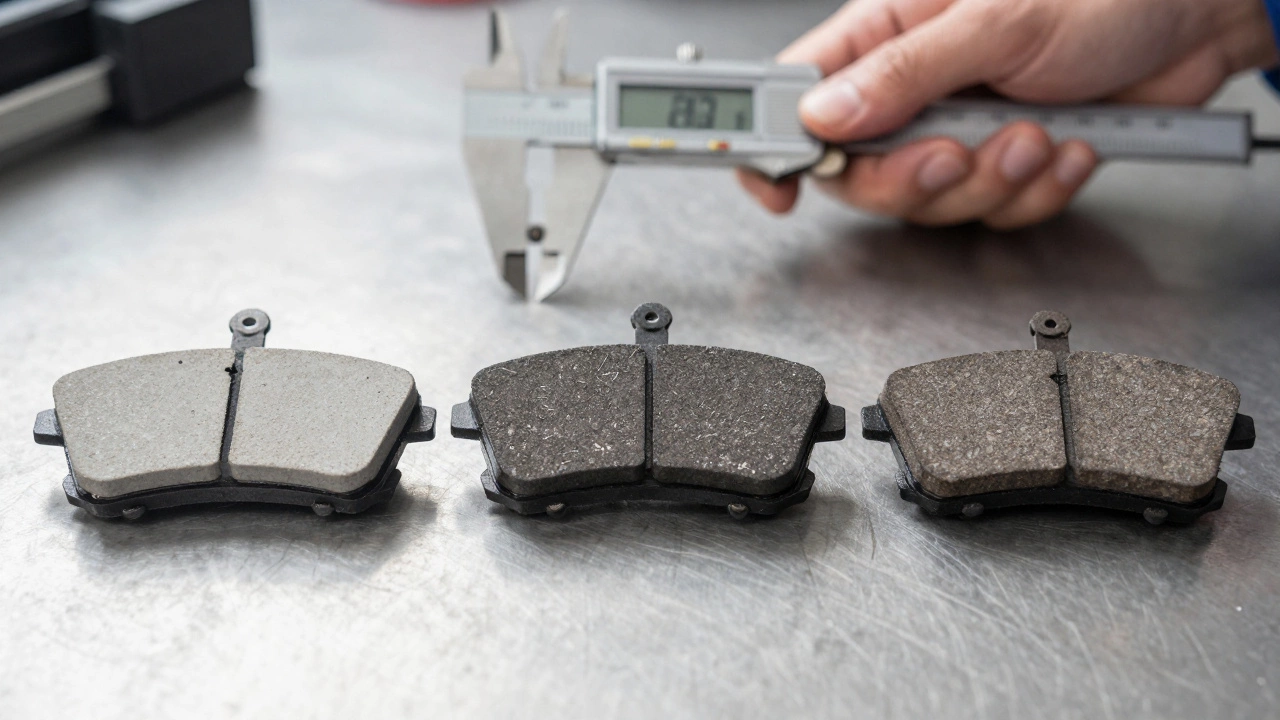
Not all brake pads are created equal. Choosing the wrong type can affect noise, dust, and stopping power. Here’s what you need to know about the three main types available in the UK market:
- Ceramic Pads: These are popular for daily drivers. They produce less dust, run quieter, and last longer. However, they perform best at moderate temperatures. If you’re driving in the hills of Lake District frequently, they might not offer the ultimate grip compared to others.
- Semi-Metallic Pads: Made with steel fibers, these handle heat well and offer strong braking power. They’re great for heavier cars or aggressive driving. The downside? They can be noisier and wear down your brake discs faster. They also produce more black dust on your wheels.
- Organic (NAO) Pads: Made from rubber, glass, and Kevlar. They’re quiet and cheap but wear out quickly. Best for light city driving where you rarely exceed 30mph. Not recommended for motorway use due to heat fade risks.
For most UK commuters, ceramic pads strike the best balance between longevity, cleanliness, and performance. Check your vehicle’s handbook for manufacturer recommendations. Using non-OEM (Original Equipment Manufacturer) brands like Bosch, Brembo, or TRW is perfectly fine and often cheaper, provided they meet the required specifications.
Maintenance Tips to Extend Pad Life
You can’t stop wear entirely, but you can slow it down. How you drive matters more than you think. Aggressive acceleration followed by hard braking is the fastest way to burn through pads. Try to anticipate traffic flow. If you see lights turning red 200 meters ahead, lift off the accelerator early and coast. This uses engine braking to slow you down, preserving your pad material.
Also, avoid riding the brake. Keeping your foot lightly on the pedal while cruising generates constant heat and friction. This glazes the pads, reducing their effectiveness and causing premature wear. Only press the brake when you actually need to slow down.
Finally, keep your wheels clean. Excessive brake dust buildup can trap moisture and grit against the caliper piston, potentially causing sticking. A quick wash with a dedicated brake cleaner spray every few months helps maintain smooth operation.
Do I have to replace brake pads on all four wheels at the same time?
No, you do not have to replace all four at once. You should always replace them in pairs (both fronts or both rears). Since front pads wear faster, you will typically replace the fronts twice before needing to touch the rears. Only replace all four if the rear pads are also worn down to a similar level as the fronts.
What happens if I only change the front brake pads?
Nothing bad happens if the rear pads are still in good condition. In fact, it is the standard and most cost-effective approach. Just ensure that the rear pads are not dangerously thin (below 3mm). If they are, you should consider replacing them too to maintain balanced braking performance and prevent ABS issues.
How much does it cost to change all 4 brake pads in the UK?
At a professional garage, expect to pay between £200 and £300 for parts and labour for all four wheels. If you do it yourself, the cost of quality aftermarket pads ranges from £60 to £100 for all four sets. Prices vary depending on your car model and whether you need new brake discs as well.
Can I mix different brands of brake pads?
It is not recommended to mix brands on the same axle, as they may have different friction coefficients and wear rates. This can lead to uneven braking and pulling. However, mixing brands between the front and rear axles is generally acceptable if the rear pads are still in good shape, though using the same brand throughout the car ensures consistent feel.
How often should I replace brake pads?
There is no fixed timeline. It depends on your driving style and conditions. City driving with frequent stops wears pads faster than motorway cruising. As a rule of thumb, check them every 12 months or 12,000 miles. Front pads typically last 20,000-40,000 miles, while rear pads can last 30,000-60,000 miles.