Wiper Blade Lifespan Calculator
Your Wiper Blade Lifespan Estimate
Enter your specific conditions to get a personalized replacement recommendation based on UK weather patterns and vehicle usage.
Most drivers don’t think about their windshield wipers until they start smearing streaks across the glass during a downpour. By then, it’s usually too late - visibility is already compromised, and safety is at risk. So how long do windshield wipers actually last? The short answer: between 6 and 12 months, depending on climate, usage, and blade type. But that’s not the whole story.
Why Windshield Wipers Wear Out Faster Than You Think
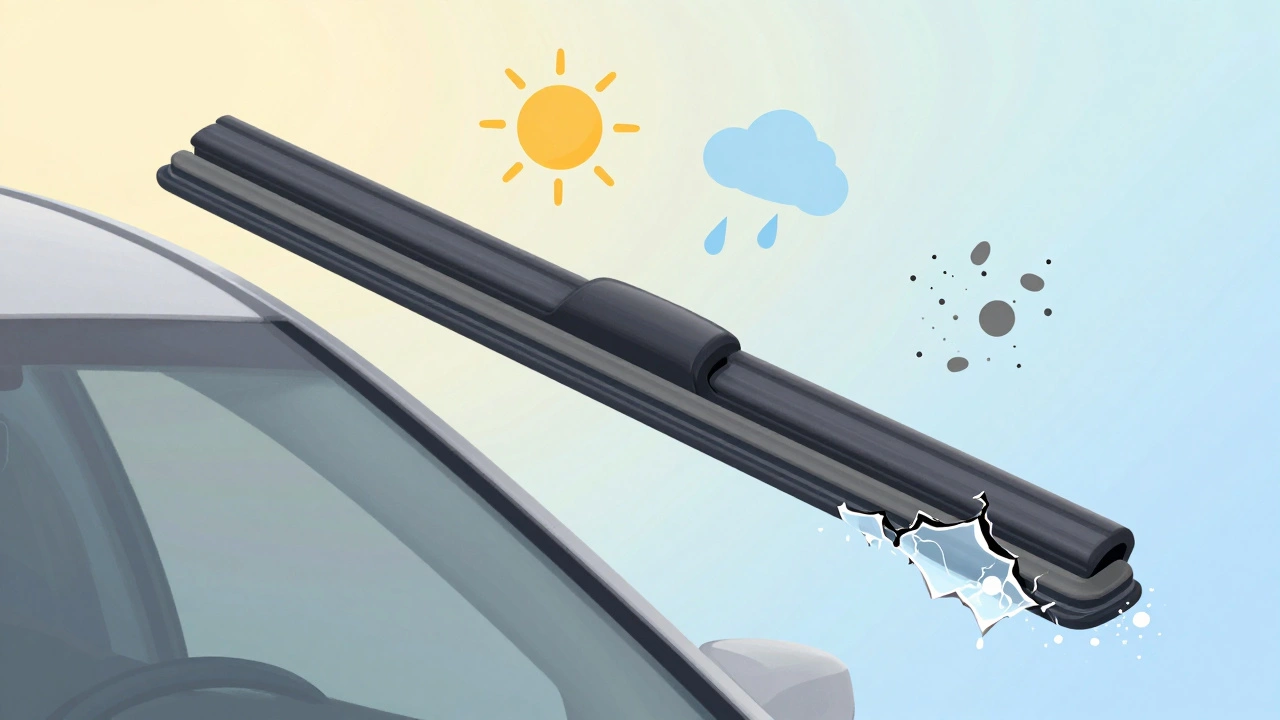
Windshield wipers aren’t like tires or brake pads. They don’t have a mileage-based lifespan. Instead, they degrade from constant exposure to sunlight, temperature swings, road grime, and friction. Even if you drive 500 miles a year, your wipers are moving back and forth thousands of times. Each pass scrapes dirt, dust, and salt across the rubber edge, slowly wearing it down.In Manchester, where rain falls more than 150 days a year, wipers are working overtime. That’s why many local mechanics here see worn blades every spring. The rubber hardens over time from UV exposure, losing its flexibility. Once that happens, the blade won’t hug the curve of the windshield anymore. That’s when you get chatter, skipping, or smearing - even if the blade looks fine.
What Affects Wiper Blade Longevity?
Not all wiper blades last the same amount of time. Here’s what makes the difference:- Climate: Hot, dry areas bake the rubber. Cold, icy climates cause the blade to freeze to the glass, tearing the edge when you turn it on. Both extremes shorten life.
- Blade type: Traditional frame-style blades (with metal arms) usually last 6-9 months. Beam-style blades (one-piece, flex-fit designs) often last 12 months or more because they distribute pressure evenly and resist warping.
- Usage: If you use your wipers every day - even on dusty roads - they wear faster. Parking under trees or near construction sites adds abrasive debris.
- Quality: Cheap blades from discount stores often use lower-grade rubber. They may look the same, but they crack and smear after just a few months.
A 2023 study by the UK Automotive Aftermarket Association tracked 1,200 wiper sets across different regions. They found that drivers in southern England replaced blades every 8 months on average. In northern regions like Manchester and Scotland, where rain and winter conditions are harsher, replacement happened every 6 months.
Signs Your Wipers Need Replacing
You don’t need a timer. Just watch for these five clear signs:- Streaking: Clear water leaves smears, not clean paths.
- Chattering: The blade skips or jumps across the glass, especially at higher speeds.
- Smearing: Greasy residue or dirt builds up on the blade edge, leaving cloudy patches.
- Curling: The rubber edge lifts off the glass - you can see it when the wiper is at rest.
- Cracking: Visible splits or dryness in the rubber. If it looks brittle, it’s already failing.
One driver in Salford told me he ignored streaking for three months. Then, during a sudden downpour, he couldn’t see the pedestrian crossing. He replaced the blades that night. "It wasn’t about convenience," he said. "It was about not hitting someone."

When to Replace Them - Even If They Look Fine
Many people wait until the wipers fail completely. That’s risky. Rubber degrades from the inside out. A blade can still appear intact but lose its sealing edge. That’s why most experts - including manufacturers like Bosch and Michelin - recommend replacing blades every 6 to 12 months, regardless of how they look.Here’s a simple rule: replace them once a year, right after winter ends. In the UK, that’s usually March. Why? Because winter salt, ice, and debris do the most damage. If you drive mostly in summer conditions, you might stretch it to 12 months. But if you’re in a rainy city, stick to 6.
Beam Blades vs. Traditional Blades: Which Lasts Longer?
| Feature | Traditional Frame-Style | Beam-Style (Aero) |
|---|---|---|
| Typical Lifespan | 6-9 months | 10-14 months |
| Pressure Distribution | Uneven (metal frame bends) | Even (flexible spine) |
| Wind Lift Resistance | Low - can lift at high speed | High - hugs windshield |
| Ice/Snow Performance | Prone to freezing | Clears better; no frame to trap snow |
| Price Range (UK) | £8-£15 per pair | £15-£28 per pair |
Beam blades cost more upfront, but they last longer and perform better in UK weather. They’re also less likely to freeze to the windshield. If you drive in rain or snow regularly, the extra cost pays for itself in safety and fewer replacements.
Can You Extend Wiper Life?
Yes - but not much. You can’t make them last two years. But you can slow the damage:- Keep the windshield clean: Dirt and grit grind down the rubber. Wash your windshield regularly - especially after roadworks or pollen season.
- Never run wipers on a dry windshield: Always use washer fluid. Even a quick spray reduces friction.
- Clear ice before using wipers: Never turn them on if they’re frozen to the glass. Gently scrape it off with a plastic ice scraper.
- Park in shade or use a windshield cover: UV exposure is the #1 killer of rubber. A simple sunshade cuts degradation by 40%.
One mechanic in Oldham told me he sees people trying to "revive" old blades with silicone spray. It doesn’t work. The rubber is already cracked. All you’re doing is making the glass greasy.
What Happens If You Don’t Replace Them?
Ignoring worn wipers isn’t just annoying - it’s dangerous. The AA reports that 1 in 8 accidents in rainy conditions involves poor visibility due to faulty wipers. In the UK, where rain is common and daylight hours are short in winter, this is a real risk.Worn blades can also scratch your windshield over time. The metal frame or hardened rubber can gouge the glass. Repairing a scratched windshield costs £200-£500. Replacing wipers? £10-£30.
And if you get pulled over for bad visibility? You could face a £100 fine and three penalty points under UK road safety regulations.
Final Advice: Set a Reminder
Don’t wait for failure. Wiper blades are one of the cheapest safety upgrades you can make. Treat them like oil changes - schedule them.Here’s what works for drivers in Manchester: Replace wipers every six months - once in March, once in September. That way, you’re always ready for winter storms and summer downpours. Use beam-style blades. Clean your windshield monthly. And never, ever run the wipers dry.
It’s not about saving money. It’s about seeing clearly - and getting home safely.
How often should I replace my windshield wipers?
Replace them every 6 to 12 months. If you live in a rainy or cold climate like the UK, aim for every 6 months. Harsh weather, UV exposure, and frequent use all shorten lifespan. Don’t wait for streaking - replace them before they fail.
Are expensive wiper blades worth it?
Yes, if you drive often or in bad weather. Beam-style blades cost more upfront but last longer, perform better in rain and snow, and reduce windshield damage. A £25 pair that lasts 14 months is cheaper than two £10 pairs that need replacing every 6 months.
Can I use wiper blades longer than a year?
Technically, yes - but it’s risky. Rubber degrades over time, even if unused. After 12 months, the blade loses flexibility and seals poorly. In the UK’s damp climate, anything over a year is asking for trouble. Safety isn’t worth the risk.
Why do my wipers squeak even after replacing them?
Squeaking usually means the windshield is dirty or the new blades are incompatible. Clean the glass with vinegar and water - never glass cleaner with ammonia. Also, make sure you bought the right size and type for your car. Some blades need specific mounting styles.
Do I need to replace both wiper blades at the same time?
Always. Even if one blade looks fine, the other is likely close to failing. Using mismatched blades causes uneven wiping, which strains the motor and leaves blind spots. Replace them as a pair - it’s cheaper than fixing a scratched windshield later.