Spark Plug Fuel Savings Calculator
Calculate how much you could save on fuel by replacing worn spark plugs. Also see potential repair costs you might avoid.
You’re driving to work, and your car sputters like it’s out of breath. The check engine light flashes. You wonder: can I drive with bad spark plugs? The short answer? Yes, you can-for a while. But you shouldn’t. Driving with bad spark plugs is like ignoring a leaky roof. It won’t collapse right away, but the damage keeps getting worse.
What Happens When Spark Plugs Go Bad
Spark plugs ignite the fuel-air mix in your engine’s cylinders. When they wear out, crack, or get coated in carbon, they can’t spark properly. That means incomplete combustion. Your engine doesn’t burn fuel cleanly. You lose power. You waste fuel. And your exhaust gets dirty.Common signs you’ve got bad spark plugs:
- Engine misfires-especially when accelerating or climbing hills
- Hard starting, especially in cold weather
- Engine rough idling or shaking at a stoplight
- Slower acceleration, feeling like the car is dragging
- Check engine light flashing or staying on
- Fuel economy drops by 15-30%
These aren’t just annoyances. They’re warning signs your engine is struggling. In the UK, where fuel prices stay high and winter conditions test your car’s reliability, ignoring this can cost you more than a simple replacement.
What Happens If You Keep Driving
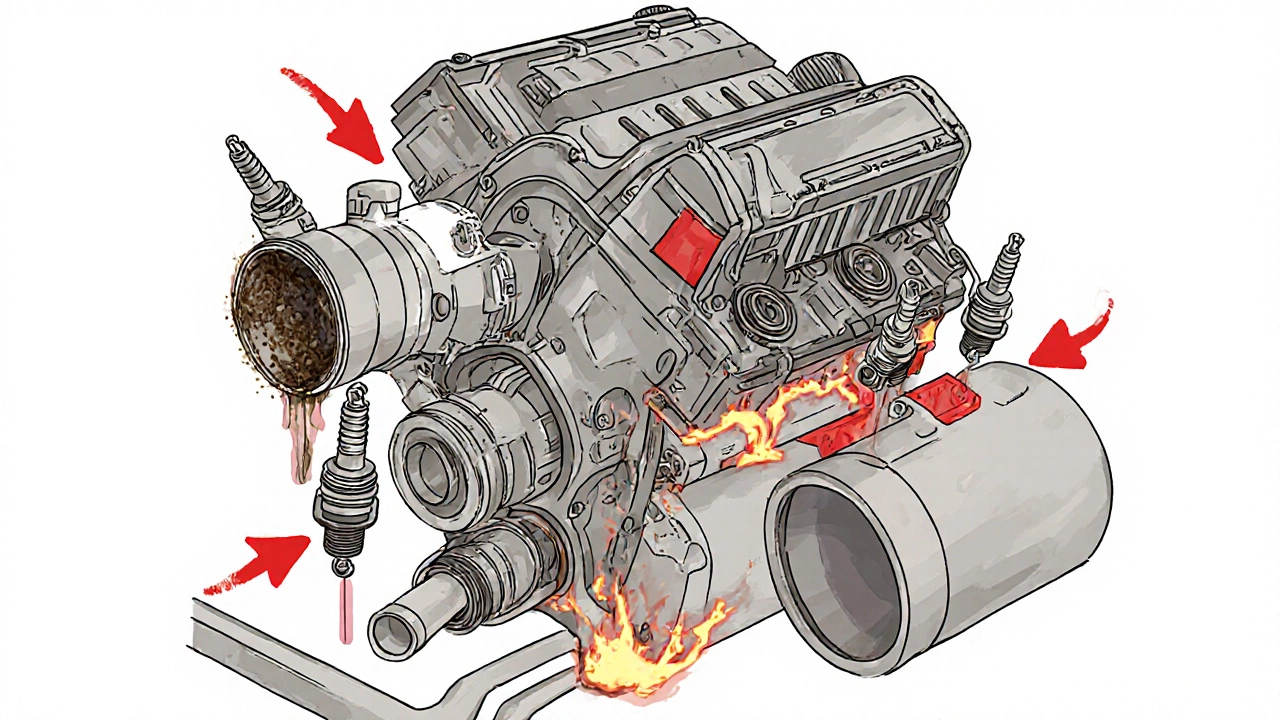
Driving with bad spark plugs doesn’t just hurt your wallet-it can wreck your engine. Here’s how:- Unburned fuel floods the catalytic converter. This expensive part, required by law in the UK, cleans exhaust gases. When raw fuel enters it, it overheats and melts. Replacing a catalytic converter costs between £500 and £1,500.
- Oil contamination. Misfires cause excess fuel to wash down cylinder walls, thinning your engine oil. That reduces lubrication. Over time, this leads to piston ring wear and cylinder scoring-repair bills that can hit £2,000+.
- Increased emissions. Your car will fail its MOT if emissions exceed limits. Bad spark plugs are a common cause of MOT failures in the UK. You won’t be able to legally drive it until fixed.
- Engine damage. In extreme cases, misfires cause pressure imbalances. Valves and pistons can collide. A bent valve means a full engine rebuild or replacement.
One driver in Manchester reported his car losing power on the M60. He kept driving for two weeks, thinking it was just a fuel issue. By the time he got it checked, the catalytic converter was destroyed, and two cylinders were scored. Repair cost: £2,800. New spark plugs? £65.
How Long Can You Really Drive With Bad Spark Plugs?
There’s no magic number. It depends on how bad they are.- If one plug is failing and the rest are fine, you might get 50-100 miles before things get serious.
- If multiple plugs are fouled or worn, you’re risking damage within 10-20 miles.
- Driving at high speeds or under load (like towing or climbing hills) makes things worse faster.
Modern engines have sensors that detect misfires. If the check engine light flashes, it means the system is detecting a misfire that could damage the catalytic converter. Stop driving. Don’t wait. Don’t drive to the garage. Call a tow truck. It’s cheaper than replacing your exhaust system.
When to Replace Spark Plugs
Most manufacturers recommend replacing spark plugs every 30,000 to 100,000 miles, depending on the type:- Standard copper plugs: Replace every 30,000-40,000 miles
- Platinum plugs: Last 60,000-80,000 miles
- Iridium plugs: Can last 80,000-100,000 miles
But mileage isn’t the only factor. If you drive short trips often-like commuting under 5 miles-the engine never fully warms up. That causes carbon buildup on the plugs. In that case, replace them every 20,000-30,000 miles, even if the manual says otherwise.
Also, if you live in a damp climate like Manchester, moisture can cause corrosion on plug threads. Check them every 12 months if you drive less than 10,000 miles a year.
What to Do If You Suspect Bad Spark Plugs
Don’t guess. Test it.- Check the check engine light. If it’s flashing, don’t drive.
- Listen for misfires. A rhythmic stuttering sound under acceleration is a classic sign.
- Use an OBD2 scanner. Most auto parts stores in the UK offer free code reads. Look for codes like P0300 (random misfire) or P0301-P0308 (cylinder-specific misfires).
- Get a visual inspection. A mechanic can pull the plugs and check for carbon buildup, oil fouling, or cracked porcelain.
If you’re handy, you can replace them yourself. Most cars take 1-2 hours. You’ll need a spark plug socket, torque wrench, and gap tool. Don’t tighten them too tight. Over-torquing can crack the threads in the cylinder head-another expensive repair.
What Happens If You Ignore It
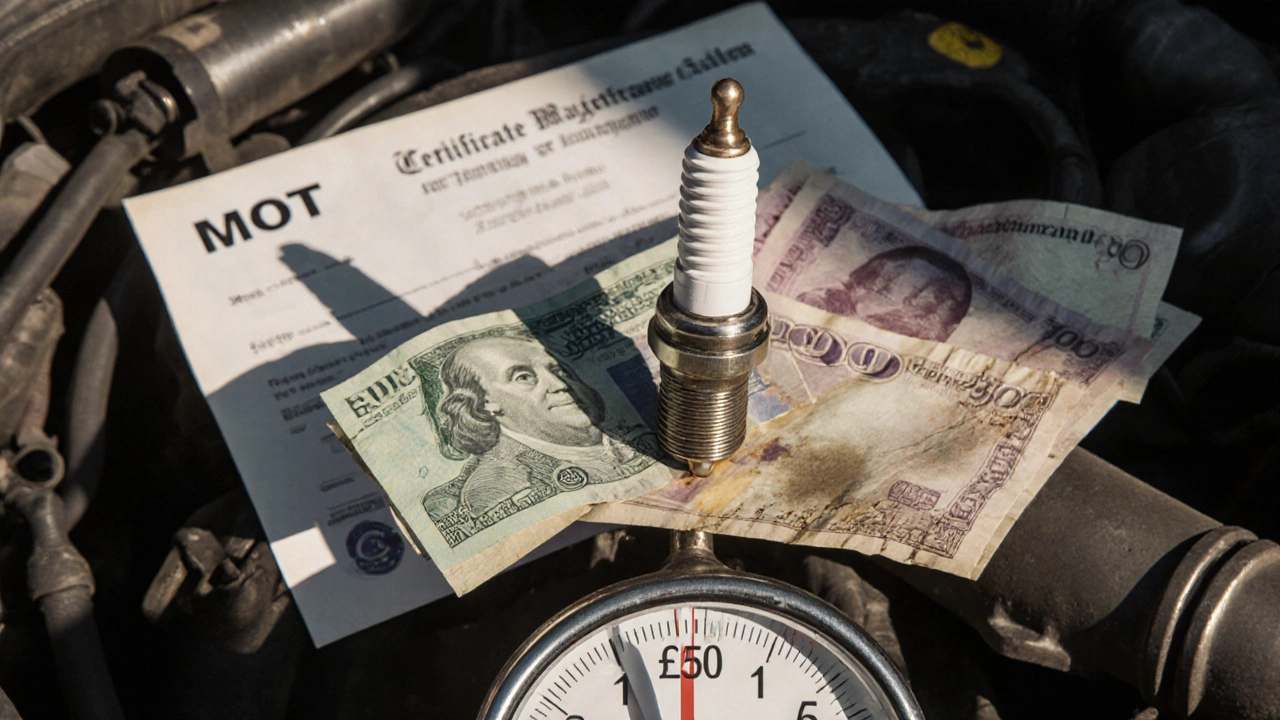
Let’s say you ignore the warning signs. Here’s what your car looks like in 6 months:- Your fuel economy drops from 42 mpg to 28 mpg. That’s £30 extra a month on fuel.
- You fail your MOT because of high CO emissions.
- Your catalytic converter glows red-hot on the motorway and melts.
- Your engine starts knocking. The mechanic says it’s time for a rebuild.
That’s £3,000+ in repairs. For a £65 part.
Pro Tips for Spark Plug Maintenance
- Replace spark plugs in sets. Never swap just one. The others are likely close to failing too.
- Use the correct plug type. Your owner’s manual lists the exact heat range and thread size. Using the wrong one can damage your engine.
- Check the gap. Even new plugs can come with incorrect gaps. Use a feeler gauge to adjust it.
- Apply anti-seize to the threads. This prevents them from seizing in the cylinder head-especially important in older cars.
- Keep a record. Write down the date and mileage when you replace them. It helps you plan ahead.
Spark plugs are one of the cheapest, easiest parts to maintain. But they’re also one of the most critical. Ignoring them doesn’t save money. It just delays the bill.
Can I drive with bad spark plugs for a few days?
Technically, yes-but only if you’re driving very short distances at low speeds. If your engine is misfiring or the check engine light is flashing, you risk damaging the catalytic converter or engine. Don’t risk it. Replace them as soon as possible.
Will bad spark plugs cause my car to stall?
Yes. Severely worn or fouled spark plugs can cause your engine to stall, especially when idling or under load. This happens because the fuel-air mixture isn’t igniting properly, leading to incomplete combustion and loss of power.
Do I need to replace all spark plugs at once?
Always replace spark plugs in full sets. Even if only one is bad, the others are likely near the end of their life. Mixing old and new plugs can cause uneven performance and put extra strain on your ignition system.
How much does it cost to replace spark plugs in the UK?
Spark plug parts cost between £30 and £100, depending on the type (copper, platinum, or iridium). Labour at a garage is typically £60-£120. DIY replacements can be done for under £50 total. Many local garages offer free fitting if you buy the plugs from them.
Can bad spark plugs cause the check engine light to flash?
Yes. A flashing check engine light usually means a severe misfire that could damage the catalytic converter. This is an emergency. Stop driving and get your car towed to a mechanic.
Are expensive spark plugs worth it?
Iridium and platinum plugs cost more upfront but last longer and improve fuel efficiency slightly. For most daily drivers, they’re worth the investment-especially if you drive a lot or want to avoid frequent replacements. For low-mileage cars, standard copper plugs are fine.