Modification Profile
Impact Analysis
Recommended Action:
Enter your modification details and click "Analyze" to see the trade-offs.
The Hidden Cost of a Louder Ride
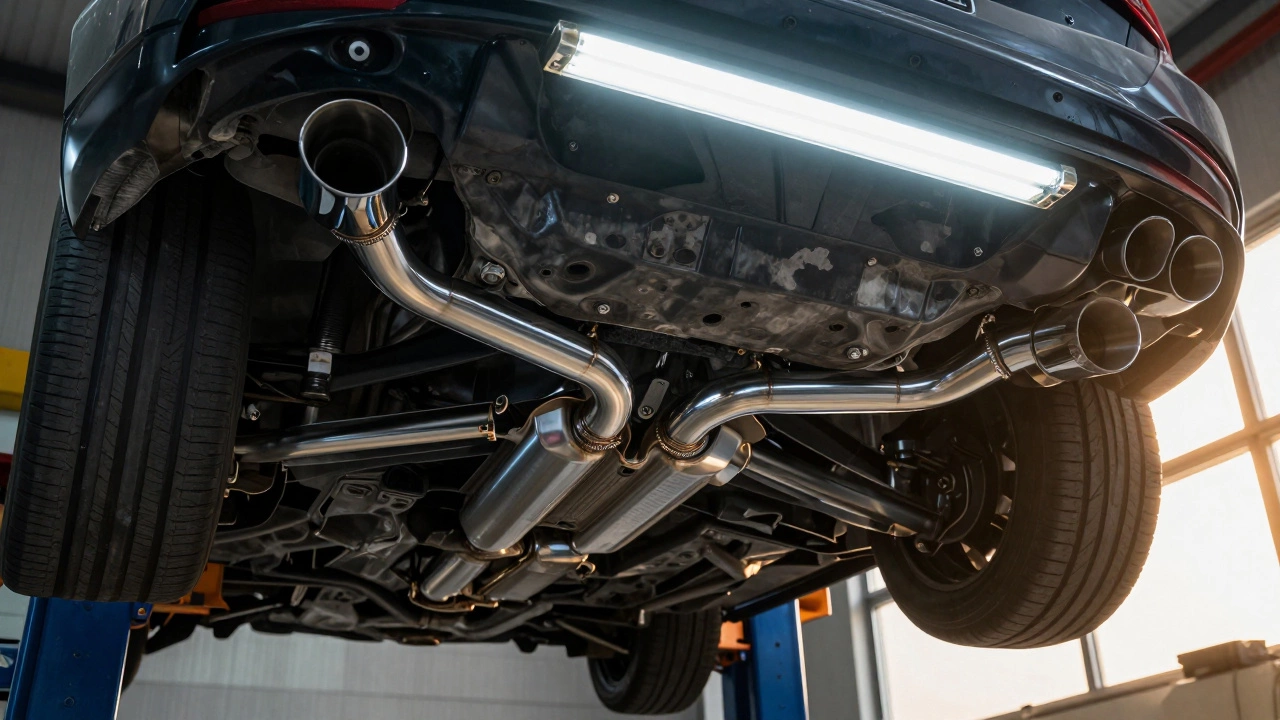
Most people look at an aftermarket exhaust is a replacement exhaust system designed by a third-party manufacturer to replace the original equipment manufacturer (OEM) system. They usually want more power or a deeper, aggressive sound. But here is the truth: swapping your factory pipes isn't just about bolting on a shiny new muffler. You're fundamentally changing how your engine breathes, and that comes with a set of trade-offs that can turn a fun project into a daily headache.
If you're thinking about upgrading, you need to know that aftermarket exhaust disadvantages go far beyond just attracting the attention of local police. From losing low-end torque to dealing with a constant humming noise that makes long trips miserable, there are real-world consequences to moving away from the engineers' original design.
Quick Takeaways: The Real Risks
- Drone: Constant low-frequency humming that causes fatigue.
- Power Loss: Potential drop in low-end torque due to reduced backpressure.
- Legal Trouble: Failure to meet emissions or noise regulations.
- Fuel Costs: Increased consumption if the tune doesn't match the airflow.
- Resale Value: Modded cars are often harder to sell to the general public.
The Nightmare of Cabin Drone
Let's talk about the most common regret: cabin drone. Imagine you're cruising at 70 mph on the motorway. Instead of a quiet cabin, you hear a deep, vibrating hum that feels like it's rattling your teeth. This happens because Resonance is the tendency of a system to oscillate with greater amplitude at some frequencies than at others. Factory exhausts are designed with specific baffles and resonators to cancel out these frequencies.
When you switch to a "cat-back" or a straight-pipe setup, you often remove these silencing components. The result is a frequency that matches the natural vibration of your car's chassis. After thirty minutes, this doesn't sound like a race car; it sounds like a headache. It makes conversations difficult and turns a relaxing drive into a stressful experience.
The Backpressure Paradox
There is a huge misconception that "more flow equals more power." While it's true that reducing restriction helps at high RPMs, your engine actually needs a certain amount of Backpressure is the resistance to the flow of exhaust gases as they exit the engine to operate efficiently at low speeds. This is especially true for turbocharged engines and naturally aspirated diesels.
If you go too wide with your piping or remove too many restrictions, you might experience a loss in low-end torque. You'll notice this when pulling away from a stoplight; the car feels sluggish until you hit the higher rev range. This is because the exhaust gases are leaving the cylinder too quickly, which can disrupt the scavenging process-the way the outgoing exhaust helps pull the fresh air-fuel mixture into the cylinder.
| Feature | OEM Exhaust | Aftermarket (Performance) |
|---|---|---|
| Noise Level | Quiet/Filtered | Loud/Aggressive |
| Low-End Torque | Optimized | Potential Drop |
| Longevity | High (Corrosion resistant) | Varies (Some cheap steel rusts fast) |
| Legal Status | Fully Compliant | Risk of Fines/Failure |

Legal Headaches and Emissions
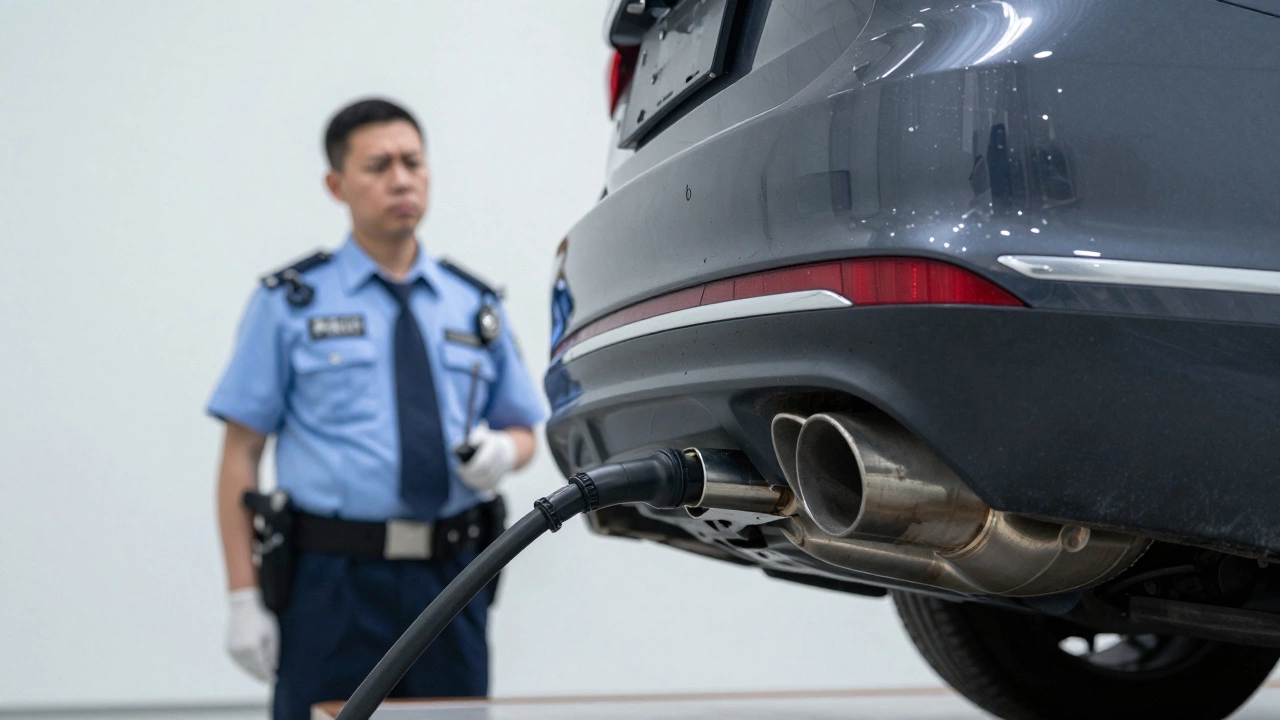
Your factory system is designed to play nice with the Catalytic Converter is an emissions control device that converts toxic gases from an internal combustion engine into less-toxic pollutants. Many aftermarket kits, especially "test pipes" or "de-cat" setups, remove or bypass these converters. This isn't just a technical change; it's a legal one.
In many regions, removing the catalytic converter is illegal and will lead to an automatic failure during an emissions test. Even if you keep the converters, a system that is too loud can lead to "disturbing the peace" citations. Police officers aren't always experts in automotive engineering; they just know your car is loud, which makes you a prime target for a stop-and-search or a ticket.
The Impact on Fuel Economy
You might think a more efficient exhaust would save fuel, but it often does the opposite. Because a loud exhaust sounds exciting, most drivers find themselves flooring the accelerator more often just to hear the engine scream. This behavioral change is the most immediate way your MPG drops.
Technically, if you change the exhaust flow significantly without updating the ECU (Engine Control Unit) is the electronic computer that controls various aspects of an internal combustion engine's operation, the air-fuel mixture can become unbalanced. If the engine runs too lean because of the increased flow, you might actually lose efficiency and, in worst-case scenarios, cause engine damage due to increased heat in the combustion chamber.
Durability and Material Failures
Not all aftermarket exhausts are created equal. While high-end T304 stainless steel is great, many "budget" performance exhausts use aluminized steel or thin-walled pipes. These often rust much faster than the heavy-duty, coated factory systems. You might find yourself dealing with leaks at the welds or hangers snapping off because the material couldn't handle the vibrations of the road.
Furthermore, poor installation is a common issue. Factory systems are precision-engineered to fit perfectly. Aftermarket systems often require "massaging" with a hammer or cutting to fit. If the alignment is slightly off, it puts stress on the engine mounts and gaskets, leading to exhaust leaks that can let fumes into the cabin-a dangerous scenario that can cause dizziness or fainting while driving.
Resale Value and Market Perception
When it comes time to sell your car, a loud exhaust is often a liability. While you might love the sound, a potential buyer looking for a reliable daily driver will see it as a red flag. To them, a loud exhaust suggests the car was driven hard, raced, or owned by someone who didn't care about the original specifications.
You'll often find that buyers ask for a discount because they want to pay to put the original factory system back on. If you've thrown away your OEM parts, you've effectively lowered the value of your vehicle. A stock car is a blank canvas; a car with a loud, droning exhaust is a specific taste that doesn't appeal to everyone.
Will an aftermarket exhaust void my warranty?
In many cases, yes, but specifically for the components it affects. While a dealer can't void your entire vehicle warranty for a muffler, they can refuse to cover any engine or emissions-related failures that they can prove were caused by the modified exhaust system.
Does a louder exhaust always mean more horsepower?
No. In fact, if a system is designed poorly, it can actually decrease horsepower by ruining the engine's volumetric efficiency. Real gains usually only happen when the exhaust is part of a complete system including a cold air intake and a proper ECU tune.
How can I stop the drone from an aftermarket exhaust?
The most effective way is to install a resonator or a Helmholtz resonator. These are designed to target and cancel out specific low-frequency waves. You can also add sound-deadening material (like Dynamat) to the floor and trunk of your car to reduce the vibrations.
Can I keep my factory cats but still get a performance sound?
Yes, look for a "cat-back" system. This replaces everything from the catalytic converter rearward. You get the sound and slight flow improvements without risking your emissions legality or removing critical pollution control devices.
Is stainless steel better than aluminized steel for exhausts?
Absolutely. Stainless steel (especially 304 grade) is far more resistant to rust and corrosion, which is vital if you live in areas where salt is used on the roads in winter. Aluminized steel is cheaper but will eventually corrode and leak.
What to Do Now
If you've already installed an exhaust and you're hating the drone, don't panic. Start by adding a resonator to the mid-pipe; this often solves 80% of the noise issues without sacrificing the tone. If you're losing low-end power, consider a smaller diameter pipe or a different muffler design that restores some backpressure.
For those still planning the purchase, my best advice is to research the specific model of your car on enthusiast forums. Look for people complaining about "drone" at 3,000 RPM. If you see a pattern, avoid that brand. Choosing a high-quality cat-back system from a reputable brand is always a safer bet than a generic "no-name" kit from a discount site.